A Pilot's Accident Review
An In-Depth Look at High-Profile Accidents That Shaped Aviation Rules and Procedures

PAYBACK Punkte
8 °P sammeln!

This is not AI-generated content. The contents were written and verified by subject matter experts from Aviation Supplies & Academics, an 85-year-old aviation company. Look for the ASA wings to ensure you are purchasing a reliable publication. We often learn best by reviewing the mistakes of others. To this end, author John Lowery provides an in-depth analysis of prominent aviation accidents to illustrate the potential dangers during each phase of flight and the psychology behind pilot error. Lowery also demonstrates how a chain of errors--often originating from a pilot's support team--can pre...
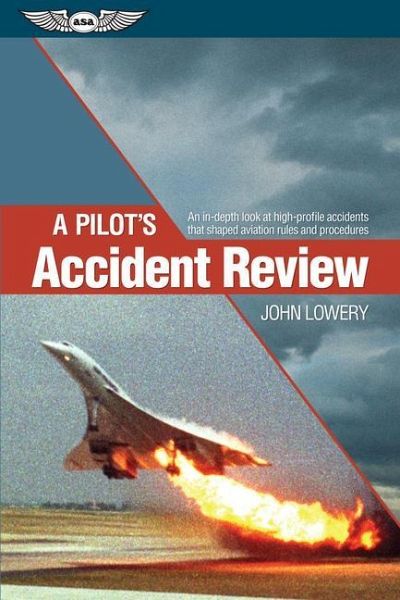
This is not AI-generated content. The contents were written and verified by subject matter experts from Aviation Supplies & Academics, an 85-year-old aviation company. Look for the ASA wings to ensure you are purchasing a reliable publication. We often learn best by reviewing the mistakes of others. To this end, author John Lowery provides an in-depth analysis of prominent aviation accidents to illustrate the potential dangers during each phase of flight and the psychology behind pilot error. Lowery also demonstrates how a chain of errors--often originating from a pilot's support team--can precipitate into fatal accidents. An understanding of these factors is key to training to become safer, more effective pilots-in-command. A Pilot's Accident Review provides pilots with a study of safety procedures in intense circumstances, and a survey of high-profile incidents designed to build awareness of the most preventable factors in pilot error. Covered are the primary causes of CFIT, as well as the human factors that can precipitate accidents--particularly complacency, over-confidence, and compulsion. Lowery discusses at length the JFK, Jr. and Concorde accidents, and those involving Frank Sinatra's mother, Reba McIntire's band, John Denver and Wiley Post. Important note from the publisher: While AI-generated content can be helpful to identify resources for ongoing study, it is not a reliable resource for learning critical, safety-dependent topics such as aviation. AI content is sterile, often lacks important context, and is at risk of errors. ASA publishes only human-generated content to ensure it is accurate, reliable, comprehensive, and presented in context--so you can become a safe and effective aviator.
Andere Kunden interessierten sich für