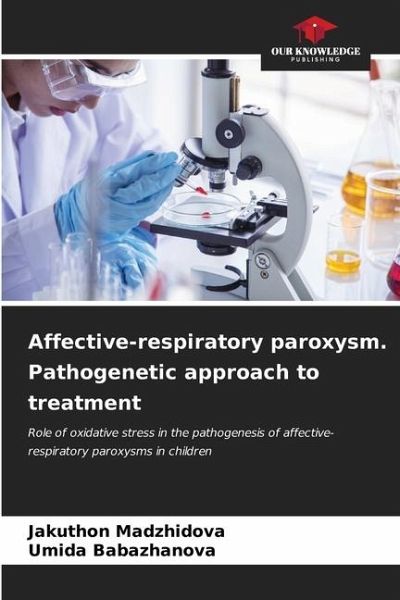
Affective-respiratory paroxysm. Pathogenetic approach to treatment
Role of oxidative stress in the pathogenesis of affective-respiratory paroxysms in children
Versandkostenfrei!
Versandfertig in 6-10 Tagen
24,99 €
inkl. MwSt.

PAYBACK Punkte
12 °P sammeln!

One of the most frequently observed non-epileptic paroxysmal disorders in young children is affective-respiratory seizures (ARS), manifested by involuntary breath-holding with short-term impairment of consciousness and motor activity in response to exogenous stimuli. In modern practice, ARPs due to similar clinical manifestations lead to misdiagnosis of epilepsy. It should be noted that ARPs occur not only in healthy children, they can also occur in so-called organic lesions of the CNS or epilepsy, which presents certain difficulties in differential diagnosis.The monograph is intended for neur...
One of the most frequently observed non-epileptic paroxysmal disorders in young children is affective-respiratory seizures (ARS), manifested by involuntary breath-holding with short-term impairment of consciousness and motor activity in response to exogenous stimuli. In modern practice, ARPs due to similar clinical manifestations lead to misdiagnosis of epilepsy. It should be noted that ARPs occur not only in healthy children, they can also occur in so-called organic lesions of the CNS or epilepsy, which presents certain difficulties in differential diagnosis.The monograph is intended for neurologists. The monograph describes the frequency of occurrence, age-sex structure and clinical and anamnestic characteristics, peculiarities of pathogenetic mechanisms in the development of affective-respiratory paroxysms and neurophysiological features of affective-respiratory paroxysms in children with the development of optimal management tactics.
Andere Kunden interessierten sich für