
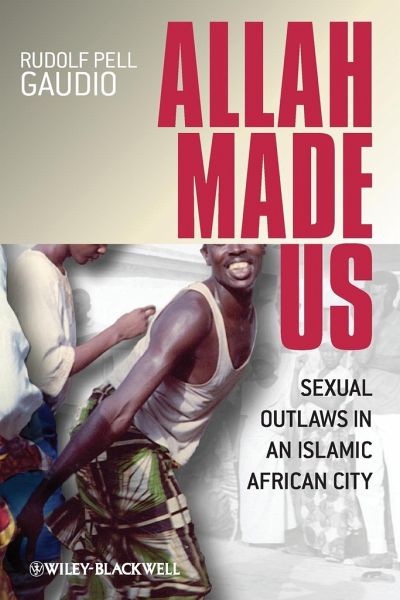
Allah Made Us
Sexual Outlaws in an Islamic African City
Versandkostenfrei!
Versandfertig in über 4 Wochen
45,99 €
inkl. MwSt.
Weitere Ausgaben:

PAYBACK Punkte
23 °P sammeln!

A rich and engrossing account of sexual outlaws in the Hausa-speaking region of northern Nigeria, where Islamic law requires strict separation of the sexes and different rules of behavior for women and men in virtually every facet of life.The first ethnographic study of sexual minorities in Africa, and one of very few works on sexual minorities in the Islamic worldEngagingly written, combining innovative, ethnographic narrative with analyses of sociolinguistic transcripts, historical texts, and popular media, including video, film, newspapers, and song-poetryAnalyzes the social experiences and...
A rich and engrossing account of sexual outlaws in the Hausa-speaking region of northern Nigeria, where Islamic law requires strict separation of the sexes and different rules of behavior for women and men in virtually every facet of life.
The first ethnographic study of sexual minorities in Africa, and one of very few works on sexual minorities in the Islamic world
Engagingly written, combining innovative, ethnographic narrative with analyses of sociolinguistic transcripts, historical texts, and popular media, including video, film, newspapers, and song-poetry
Analyzes the social experiences and expressive culture of 'yan daudu (feminine men in Nigerian Hausaland) in relation to local, national, and global debates over gender and sexuality at the turn of the twenty-first century
Winner of the 2009 Ruth Benedict Prize in the category of "Outstanding Monograph"
The first ethnographic study of sexual minorities in Africa, and one of very few works on sexual minorities in the Islamic world
Engagingly written, combining innovative, ethnographic narrative with analyses of sociolinguistic transcripts, historical texts, and popular media, including video, film, newspapers, and song-poetry
Analyzes the social experiences and expressive culture of 'yan daudu (feminine men in Nigerian Hausaland) in relation to local, national, and global debates over gender and sexuality at the turn of the twenty-first century
Winner of the 2009 Ruth Benedict Prize in the category of "Outstanding Monograph"
Andere Kunden interessierten sich für