KI-Beratung Beta

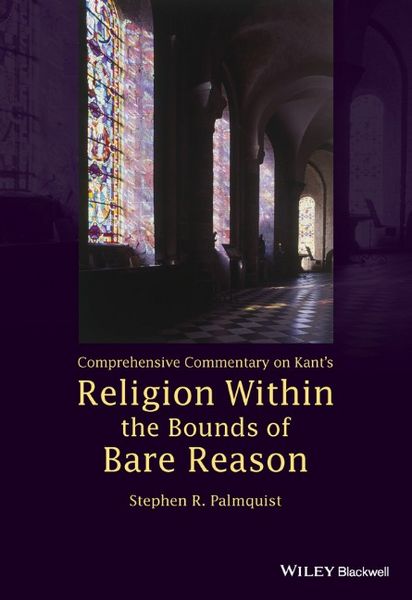
Produktbild: Comprehensive Commentary on Kant's Religion Within the Bounds of Bare Reason

Comprehensive Commentary on Kant's Religion Within the Bounds of Bare Reason

225,99 €

inkl. gesetzl. MwSt., Versandkostenfrei


Beschreibung

Produktdetails

Einband

Gebundene Ausgabe

Erscheinungsdatum

21.12.2015

Verlag

John Wiley & Sons Inc

Seitenzahl

640

Maße (L/B/H)

25,2/17,4/3,5 cm

Gewicht

1096 g

Auflage

1. Auflage

Sprache

Englisch

ISBN

978-1-118-61920-9

Beschreibung

Rezension

"In this thorough commentary with a new translation, Palmquist argues that Kant treats religion as a distinctive experience beyond both knowledge and morality, and that his major writing on religion is the central and culminating work of his philosophical endeavor. It is an impressive and intriguing accomplishment."
 
-Richard Velkley, Tulane University
 
"Kant's Religion within the Bounds of Bare Reason is arguably his most underrated great work, and there is probably no better qualified commentator on it than Palmquist."
 
-Wayne Pomerleau, Gonzaga University

Produktdetails

Einband

Gebundene Ausgabe

Erscheinungsdatum

21.12.2015

Verlag

John Wiley & Sons Inc

Seitenzahl

640

Maße (L/B/H)

25,2/17,4/3,5 cm

Gewicht

1096 g

Auflage

1. Auflage

Sprache

Englisch

ISBN

978-1-118-61920-9

Herstelleradresse

Libri GmbH
Europaallee 1
36244 Bad Hersfeld
DE

Email: gpsr@libri.de

Noch keine Bewertungen vorhanden

Verfassen Sie die erste Bewertung zu diesem Artikel

Helfen Sie anderen Kundinnen und Kunden durch Ihre Meinung.

Kundinnen und Kunden meinen

Bewertungen (0)

Die Leseprobe wird geladen.
  • Produktbild: Comprehensive Commentary on Kant's Religion Within the Bounds of Bare Reason
  • Preface x
     
    Acknowledgments xxiii
     
    Abbreviations xxvi
     
    Introduction: The Hermeneutic Background to Kant's Religion: The Two Prefaces (R 3-14) 1
     
    1. Kant's private beliefs and the writing of Religion 1
     
    2. The 1793 Preface: (A) Religion as the final purpose of morality 7
     
    3. The 1793 Preface: (B) Unifying philosophical and biblical theology 21
     
    4. The 1794 Preface: Two experiments and Kant's responses to critics 31
     
    Part I: Human Nature's Transcendental Problem: Evil and the Boundary of Goodness (First Piece) 41
     
    1 The Original Goodness of Human Nature: Introduction, Comment, and Section I (R 19-28) 43
     
    1. Untitled introduction: Is humanity good or evil by nature? 43
     
    2. Comment: (A) Why moral neutrality is impossible 51
     
    3. Comment: (B) Could humans be partly good and partly evil? 59
     
    4. Section I: Human nature's original predisposition is good 63
     
    2 The Propensity to Evil in Human Nature: Sections II and III (R 28-39) 72
     
    1. Section II: (A) Three sources of moral evil 72
     
    2. Section II: (B) Defining evil as a perversion of moral reasoning 78
     
    3. Section III: (A) Empirical evil and its origin on the boundary 83
     
    4. Section III: (B) The need for (and form of) an a priori proof 92
     
    3 Evil's Rational Origin and the Hope for Recovery: Sections IV and V (R 39-52) 106
     
    1. Section IV: (A) Transcendental versus empirical origins 106
     
    2. Section IV: (B) Assessing the Bible's account of evil's origin 112
     
    3. Section V: (A) Divine aid and conversion's possibility 120
     
    4. Section V: (B) God's role in transforming moral character 133
     
    Appendix I: Experiencing the Effects of Grace against Evil: The First General Comment (R 52-3) 144
     
    Part II: The Individual's Logical Struggle: The Power of Belief in Divine Aid (Second Piece) 151
     
    4 The Personified Idea of the Good Principle: Introduction and Section One, Subsections A and B (R 57-66) 153
     
    1. Untitled introduction: How to distinguish evil from good 153
     
    2. Section One, A: The archetype of perfection as a divine gift 161
     
    3. Section One, B: (A) Becoming exemplary via practical faith 166
     
    4. Section One, B: (B) An archetypal person's twofold nature 169
     
    5 Legitimizing Hope in Divine Grace: Section One, Subsection C (R 66-78) 179
     
    1. First difficulty: How can imperfect beings become holy? 179
     
    2. Second difficulty: Can we be certain of our eternal destiny? 183
     
    3. Third difficulty: How can God punish pre?]conversion evil? 195
     
    4. Overview: Grace as the basis for a legal claim to being good 207
     
    6 Biblical Symbols of the Struggle with Evil: Section Two (R 78-84) 215
     
    1. The Genesis narrative on evil's legal claim to dominion 215
     
    2. Advent of a unique person, free from the propensity to evil 218
     
    3. In what sense does the crucifixion defeat the power of evil? 223
     
    4. The narrative's rational meaning 227
     
    Appendix II: Experiencing Miracles as Self?]Negating: The Second General Comment (R 84-9) 233
     
    Part III: The Community's Empirical Victory: The Church as Historical Vehicle for Good (Third Piece) 249
     
    7 The Founding of a True Church: Introduction and Division One, Sections I-V (R 93-109) 251
     
    1. Untitled introduction: Hope for victory in struggling with evil 251
     
    2. Division One, Sections I-III: Founding the ethical community 255
     
    i. Sections I and II: The duty to leave the state of nature 255
     
    ii. Section III: An ethical community requires God 263
     
    3. Division One, Sections IV-V: Establishing a true church 267
     
    i. Sect