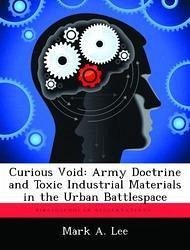
Curious Void
Army Doctrine and Toxic Industrial Materials in the Urban Battlespace
Versandkostenfrei!
Versandfertig in über 4 Wochen
15,99 €
inkl. MwSt.

PAYBACK Punkte
8 °P sammeln!

This monograph investigates US Army potential to operate in a toxic urban environment. The monograph begins by demonstrating the increasing likelihood of urban operations precipitated by global urbanization. Joined with the rapidly growing population is a growing list of operationally significant toxic materials in the urban environment. Toxic industrial chemicals, radioactive material and industrial hazards present unique hazards throughout the urban complex. The monograph frames the civilian emergency response capability in the DTLOMS model. Since Civilian emergency response agencies routine...
This monograph investigates US Army potential to operate in a toxic urban environment. The monograph begins by demonstrating the increasing likelihood of urban operations precipitated by global urbanization. Joined with the rapidly growing population is a growing list of operationally significant toxic materials in the urban environment. Toxic industrial chemicals, radioactive material and industrial hazards present unique hazards throughout the urban complex. The monograph frames the civilian emergency response capability in the DTLOMS model. Since Civilian emergency response agencies routinely plan, identify and mitigate toxic materials, analysis of their methods highlighted some of the critical functions. After Civilian capabilities are evaluated, the monograph identifies the current US Army capability using the DTLOMS model. A case study of the US Army's response to toxic materials in Bosnia-Herzegovina during Operation Joint Endeavor demonstrated the incoherent US response. The monograph concludes that US Army forces do not have the DTLOMS to plan, identify and mitigate these hazards. The conclusion recommends several changes needed to meet this new operational challenge This work has been selected by scholars as being culturally important, and is part of the knowledge base of civilization as we know it. This work was reproduced from the original artifact, and remains as true to the original work as possible. Therefore, you will see the original copyright references, library stamps (as most of these works have been housed in our most important libraries around the world), and other notations in the work. This work is in the public domain in the United States of America, and possibly other nations. Within the United States, you may freely copy and distribute this work, as no entity (individual or corporate) has a copyright on the body of the work. As a reproduction of a historical artifact, this work may contain missing or blurred pages, poor pictures, errant marks, etc. Scholars believe, and we concur, that this work is important enough to be preserved, reproduced, and made generally available to the public. We appreciate your support of the preservation process, and thank you for being an important part of keeping this knowledge alive and relevant.
Andere Kunden interessierten sich für