DECENTRALIZATION IN BURKINA FASO
The challenge of getting local elected officials to take ownership of the process
Versandkostenfrei!
Versandfertig in 6-10 Tagen
29,99 €
inkl. MwSt.

PAYBACK Punkte
15 °P sammeln!

Burkina Faso's commitment to making decentralization a catalyst for local development led to the establishment of deliberative bodies in 351 communes following the municipal elections of April 23, 2006. Following the municipal elections of December 2, 2012, these bodies were renewed for a new term, which should ensure greater social ownership of the decentralization process. However, in many communes, the expected changes are hardly perceptible. Worse still, the key players - the municipal councillors - do not demonstrate a clear understanding of their roles. An analysis of the decentralizatio...
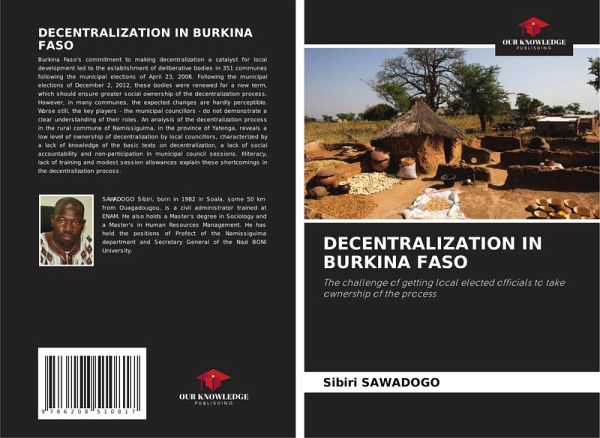
Burkina Faso's commitment to making decentralization a catalyst for local development led to the establishment of deliberative bodies in 351 communes following the municipal elections of April 23, 2006. Following the municipal elections of December 2, 2012, these bodies were renewed for a new term, which should ensure greater social ownership of the decentralization process. However, in many communes, the expected changes are hardly perceptible. Worse still, the key players - the municipal councillors - do not demonstrate a clear understanding of their roles. An analysis of the decentralization process in the rural commune of Namissiguima, in the province of Yatenga, reveals a low level of ownership of decentralization by local councillors, characterized by a lack of knowledge of the basic texts on decentralization, a lack of social accountability and non-participation in municipal council sessions. Illiteracy, lack of training and modest session allowances explain these shortcomings in the decentralization process.
Andere Kunden interessierten sich für