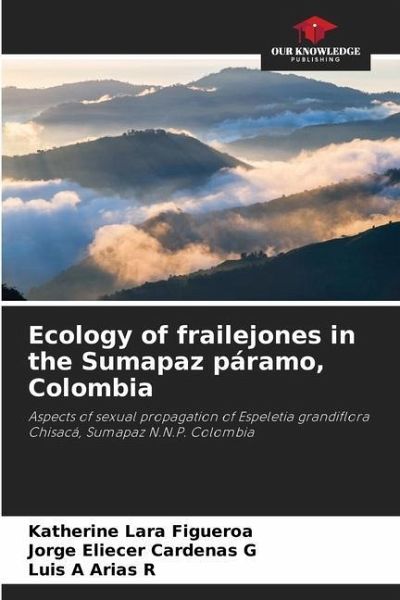
Ecology of frailejones in the Sumapaz páramo, Colombia
Aspects of sexual propagation of Espeletia grandiflora Chisacá, Sumapaz N.N.P. Colombia
Versandkostenfrei!
Versandfertig in 6-10 Tagen
36,99 €
inkl. MwSt.

PAYBACK Punkte
18 °P sammeln!

In this work we determined the relationship between the population structure of Espeletia grandiflora and its sexual propagation in a disturbed sector of the Chisacá páramo (Sumapaz N.N.P.), in order to generate a baseline for studies that allow its conservation and restoration in disturbed areas. The population surrounding the Los Tunjos lagoon was sampled through plots, where E. grandiflora has a large supply of seeds, with low dispersal and seasonal germination rate, which forms a seed bank with regenerative potential due to its dormancy. The reduced survival rate of the seedlings and the...
In this work we determined the relationship between the population structure of Espeletia grandiflora and its sexual propagation in a disturbed sector of the Chisacá páramo (Sumapaz N.N.P.), in order to generate a baseline for studies that allow its conservation and restoration in disturbed areas. The population surrounding the Los Tunjos lagoon was sampled through plots, where E. grandiflora has a large supply of seeds, with low dispersal and seasonal germination rate, which forms a seed bank with regenerative potential due to its dormancy. The reduced survival rate of the seedlings and the longevity of its mature individuals, allows determining the species as a non-pioneer ecotype. Research like this in the ecology of high mountain populations is necessary given the environmental and social problems of our páramos and constitutes a tool for projects of organizations that are willing to work for the conservation and management of natural resources.
Andere Kunden interessierten sich für