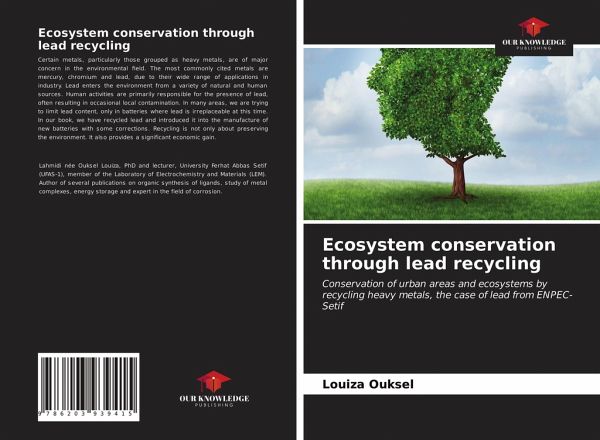
Ecosystem conservation through lead recycling
Conservation of urban areas and ecosystems by recycling heavy metals, the case of lead from ENPEC-Setif
Versandkostenfrei!
Versandfertig in 6-10 Tagen
27,99 €
inkl. MwSt.

PAYBACK Punkte
14 °P sammeln!

Certain metals, particularly those grouped as heavy metals, are of major concern in the environmental field. The most commonly cited metals are mercury, chromium and lead, due to their wide range of applications in industry. Lead enters the environment from a variety of natural and human sources. Human activities are primarily responsible for the presence of lead, often resulting in occasional local contamination. In many areas, we are trying to limit lead content, only in batteries where lead is irreplaceable at this time. In our book, we have recycled lead and introduced it into the manufact...
Certain metals, particularly those grouped as heavy metals, are of major concern in the environmental field. The most commonly cited metals are mercury, chromium and lead, due to their wide range of applications in industry. Lead enters the environment from a variety of natural and human sources. Human activities are primarily responsible for the presence of lead, often resulting in occasional local contamination. In many areas, we are trying to limit lead content, only in batteries where lead is irreplaceable at this time. In our book, we have recycled lead and introduced it into the manufacture of new batteries with some corrections. Recycling is not only about preserving the environment. It also provides a significant economic gain.
Andere Kunden interessierten sich für