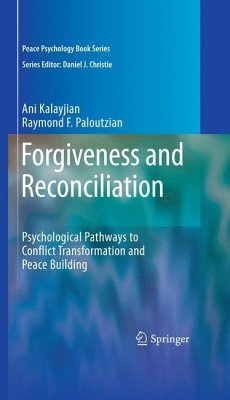

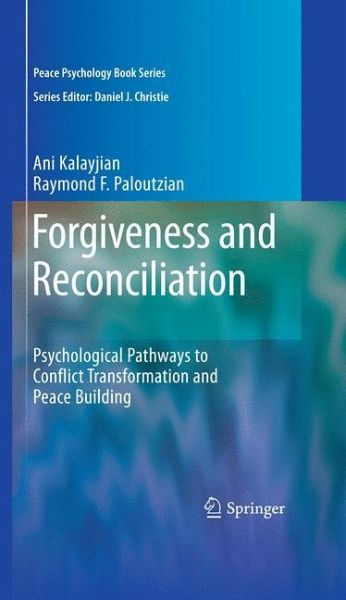
Forgiveness and Reconciliation
Psychological Pathways to Conflict Transformation and Peace Building
Versandkostenfrei!
Versandfertig in 6-10 Tagen
76,99 €
inkl. MwSt.
Weitere Ausgaben:

PAYBACK Punkte
38 °P sammeln!

The book addresses the need to move via forgiveness and reconciliation beyond the negative effects of trauma on individuals, couples, families, and communities. Both human-created trauma and the spiritual and psychological distress that results from natural cause (e.g. earthquakes, floods, illness, and impending death) are included as situations that call forth the need to forgive others, the universe, God, and, at times, oneself. The authors will approach forgiveness from several perspectives: social-psychological, biopsychological, human developmental, multi-generational, psychotherapeutic, psychoeducational, spiritual, via the media and the arts, or through construction of memorials, as well from a perspective of working toward world peace.
We all long for peace within ourselves, families, communities, countries, and throughout the world. We wonder what we can do about the multitude of con?icts currently wreaking havoc across the globe and the continuous reports of violence in communities as well as within families. Most of the time, we contemplate solutions beyond our reach, and overlook a powerful tool that is at our disposal: forgiveness. As a genocide survivor, I know something about it. As the genocide unfolded in Rwanda in 1994, I was devastated by what I believed to be the inevitable deaths of my loved ones. The news that my parents and my seven siblings had indeed been killed was simply unbearable. Anger and bitterness became my daily companions. Likewise, I continued to wonder how the Hutus and Tutsis in Rwanda could possibly reconcile after one of the most horrendous genocides of the 20th century. It was not until I came to understand the notion of forgiveness that I was able to see the light at the end ofthe tunnel. Common wisdom suggests that forgiveness comes after a perpetrator makes a genuine apology. This wisdom informs us that in the aftermath of a wrongdoing, the offender must acknowledge the wrong he or she has done, express remorse, express an apology, commit to never repeating said harm, and make reparations to theextentpossible.Onlythencanthevictimforgiveandagreetoneverseekrevenge.
Andere Kunden interessierten sich für