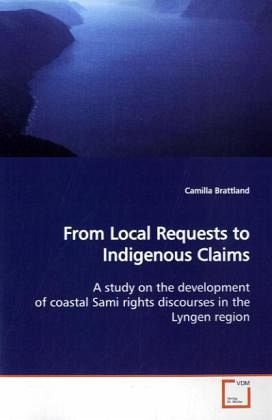
From Local Requests to Indigenous Claims
A study on the development of coastal Sami rights discourses in the Lyngen region
Versandkostenfrei!
Versandfertig in 6-10 Tagen
32,99 €
inkl. MwSt.

PAYBACK Punkte
16 °P sammeln!

In this book, which is based on a master thesis work,we follow the development and rise of discourses on coastal Sami fishing rights in northern Norway during the last few decades. The rise in rights awareness among the coastal Sami was prompted by increasing threats to the traditional coastal Sami way of life, especially after the 1990 fisheries crises. In public discourses, the issue of coastal Sami fishing rights meet with challenges. One challenge is the history of Norwegianization that hid away coastal Sami culture to the point that any mention of Sami history is being politically and cul...
In this book, which is based on a master thesis work,
we follow the development and rise of
discourses on coastal Sami fishing rights in
northern Norway during the last few decades. The
rise in rights awareness among the coastal Sami
was prompted by increasing threats to the
traditional coastal Sami way of life, especially
after the 1990 fisheries crises. In public
discourses, the issue of coastal Sami fishing rights
meet with challenges. One challenge is the history
of Norwegianization that hid away coastal Sami
culture to the point that any mention of Sami
history is being politically and culturally
incorrect. Another factor is the general power
structure in Norwegian fisheries management, where
communities stand few chances against the global
market forces and national policies. However, in the
Lyngen region, the local population had argued for
several decades that both the fish stocks and their
traditional ways of fishing were threatened by the
national Norwegian fisheries regulations. Coastal
Sami thus face a double challenge for the recognition
of the right to fish. The book is of use for
fisheries managers, those interested in Sami rights,
and historians.
we follow the development and rise of
discourses on coastal Sami fishing rights in
northern Norway during the last few decades. The
rise in rights awareness among the coastal Sami
was prompted by increasing threats to the
traditional coastal Sami way of life, especially
after the 1990 fisheries crises. In public
discourses, the issue of coastal Sami fishing rights
meet with challenges. One challenge is the history
of Norwegianization that hid away coastal Sami
culture to the point that any mention of Sami
history is being politically and culturally
incorrect. Another factor is the general power
structure in Norwegian fisheries management, where
communities stand few chances against the global
market forces and national policies. However, in the
Lyngen region, the local population had argued for
several decades that both the fish stocks and their
traditional ways of fishing were threatened by the
national Norwegian fisheries regulations. Coastal
Sami thus face a double challenge for the recognition
of the right to fish. The book is of use for
fisheries managers, those interested in Sami rights,
and historians.
Andere Kunden interessierten sich für