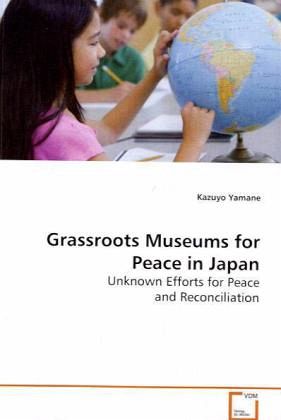
Grassroots Museums for Peace in Japan
Unknown Efforts for Peace and Reconciliation
Versandkostenfrei!
Versandfertig in 6-10 Tagen
52,99 €
inkl. MwSt.

PAYBACK Punkte
26 °P sammeln!

There are many peace museums in Japan, but thequality of the exhibitions is problematic becauseJapan s victim side of World War II tends to beexhibited at public peace museums without exhibitingJapan s aggression. The Osaka International PeaceCentre is a public peace museum, but the exhibitionson Japan s aggression could remain in spite ofnationalists attacks in the 1990s, which raised aquestion why it was possible to exhibit Japan saggression. The aim of this book is to explorecitizens efforts for promoting peace andreconciliation at peace museums in Japan in the1990s. This book brings into l...
There are many peace museums in Japan, but the
quality of the exhibitions is problematic because
Japan s victim side of World War II tends to be
exhibited at public peace museums without exhibiting
Japan s aggression. The Osaka International Peace
Centre is a public peace museum, but the exhibitions
on Japan s aggression could remain in spite of
nationalists attacks in the 1990s, which raised a
question why it was possible to exhibit Japan s
aggression. The aim of this book is to explore
citizens efforts for promoting peace and
reconciliation at peace museums in Japan in the
1990s. This book brings into light citizens efforts
for peace and reconciliation at the Osaka
International Peace Centre and also three private
peace museums. It is argued that citizens active
attitude and action are the key factors for peace
museums to exhibit the historical truth (Japan s
aggression) and engage in peacemaking at both public
and private peace museums. This book should be
useful to professionals in peace education, peace
research, and peace making through peace museums, or
anyone else who is interested in promoting peace.
quality of the exhibitions is problematic because
Japan s victim side of World War II tends to be
exhibited at public peace museums without exhibiting
Japan s aggression. The Osaka International Peace
Centre is a public peace museum, but the exhibitions
on Japan s aggression could remain in spite of
nationalists attacks in the 1990s, which raised a
question why it was possible to exhibit Japan s
aggression. The aim of this book is to explore
citizens efforts for promoting peace and
reconciliation at peace museums in Japan in the
1990s. This book brings into light citizens efforts
for peace and reconciliation at the Osaka
International Peace Centre and also three private
peace museums. It is argued that citizens active
attitude and action are the key factors for peace
museums to exhibit the historical truth (Japan s
aggression) and engage in peacemaking at both public
and private peace museums. This book should be
useful to professionals in peace education, peace
research, and peace making through peace museums, or
anyone else who is interested in promoting peace.
Andere Kunden interessierten sich für