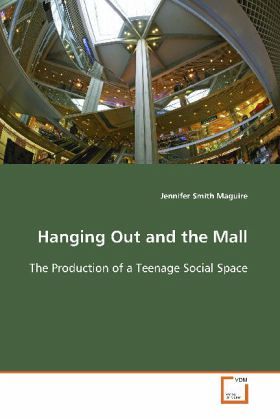
Hanging Out and the Mall
The Production of a Teenage Social Space
Versandkostenfrei!
Versandfertig in 6-10 Tagen
32,99 €
inkl. MwSt.

PAYBACK Punkte
16 °P sammeln!

Lacking other spaces to call their own, many young people turn to shopping malls as sites for hanging out. However, adolescents must negotiate several obstacles that stem from their ambivalent relationship with malls, which are simultaneously welcoming (safe environments that target the teenage market) and hostile (places in which teenagers are seen as a threat to safety and order). Based on ethnographic research and interviews with teenagers and mall authorities, the book analyzes hanging out as the tactical practice of movement--as shopping, loitering, and watching the crowd--which is both f...
Lacking other spaces to call their own, many young
people turn to shopping malls as sites for hanging
out. However, adolescents must negotiate several
obstacles that stem from their ambivalent
relationship with malls, which are simultaneously
welcoming (safe environments that target the teenage
market) and hostile (places in which teenagers are
seen as a threat to safety and order). Based on
ethnographic research and interviews with teenagers
and mall authorities, the book analyzes hanging out
as the tactical practice of movement--as shopping,
loitering, and watching the crowd--which is both
facilitated and constrained by the strategies of the
mall. The book examines the intersections of the
commercial, controlled and potentially public
setting of the mall with the interactive,
consumptive and disruptive activities of
adolescents, suggesting how teens temporarily
transform the mall to produce a space of theirown.
Bringing theoretical perspectives on space and youth
together with grounded, empirical research, the book
will be of interest to students and researchers in
the fields of Sociology and Cultural Studies.
people turn to shopping malls as sites for hanging
out. However, adolescents must negotiate several
obstacles that stem from their ambivalent
relationship with malls, which are simultaneously
welcoming (safe environments that target the teenage
market) and hostile (places in which teenagers are
seen as a threat to safety and order). Based on
ethnographic research and interviews with teenagers
and mall authorities, the book analyzes hanging out
as the tactical practice of movement--as shopping,
loitering, and watching the crowd--which is both
facilitated and constrained by the strategies of the
mall. The book examines the intersections of the
commercial, controlled and potentially public
setting of the mall with the interactive,
consumptive and disruptive activities of
adolescents, suggesting how teens temporarily
transform the mall to produce a space of theirown.
Bringing theoretical perspectives on space and youth
together with grounded, empirical research, the book
will be of interest to students and researchers in
the fields of Sociology and Cultural Studies.
Andere Kunden interessierten sich für