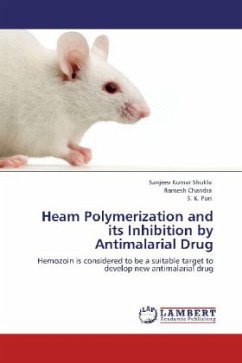
Heam Polymerization and its Inhibition by Antimalarial Drug
Hemozoin is considered to be a suitable target to develop new antimalarial drug
Versandkostenfrei!
Versandfertig in 6-10 Tagen
32,99 €
inkl. MwSt.

PAYBACK Punkte
16 °P sammeln!

Malaria is one of the most common diseases in developing countries and poses a great challenge to world health. Resistance of malaria parasites to available antimalarial drugs remains the main challenge to the effective control of the disease. The physiological conditions prevailing with in the acidic digestive vacuoles of the malaria parasites provide a suitable physiochemical environment for conversion of heam to beta-hematin/hemozoin. Though the both protein as well as lipids mediated beta-hematin formation remain valid hypothesis but later seems to be more relevant, when mechanism of hemoz...
Malaria is one of the most common diseases in developing countries and poses a great challenge to world health. Resistance of malaria parasites to available antimalarial drugs remains the main challenge to the effective control of the disease. The physiological conditions prevailing with in the acidic digestive vacuoles of the malaria parasites provide a suitable physiochemical environment for conversion of heam to beta-hematin/hemozoin. Though the both protein as well as lipids mediated beta-hematin formation remain valid hypothesis but later seems to be more relevant, when mechanism of hemozoin synthesis is considered as a simple physiochemical reaction. Some repeats earlier heme show loss of beta-hematin formation activity of the parasite lysate by protenase K and heat treatment. The digestion of this cytosol, which consists essentially of hemoglobin results in the formation of potentially toxic ferriprotoporphyrin IX (FP). Several antimalarial drugs are thought to exert theireffect by complexing with FP, thus inhibiting its detoxification through polymerization to hemozoin. Our aim shows that inhibition of heam polymerization by Arteether.
Andere Kunden interessierten sich für