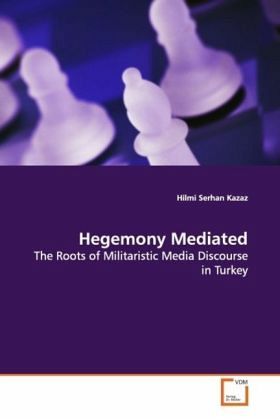
Hegemony Mediated
The Roots of Militaristic Media Discourse in Turkey
Versandkostenfrei!
Versandfertig in 6-10 Tagen
32,99 €
inkl. MwSt.

PAYBACK Punkte
16 °P sammeln!

The major lines of sociological critique take theview that the tight bind of media to the marketdisplaces the logic of and contents of the field ofpolitics itself, and the dominance of one socialactor or group within the media discourse depends ontheir economic power in the system. In this bookKazaz posits that explaining the dominance within themedia discourse on merely economic grounds isreductionism because such approach ignores thecultural components. The military as a strong socialactor and militarist discourse as a component ofnational foundational myth in Turkey suggest aground for exam...
The major lines of sociological critique take the
view that the tight bind of media to the market
displaces the logic of and contents of the field of
politics itself, and the dominance of one social
actor or group within the media discourse depends on
their economic power in the system. In this book
Kazaz posits that explaining the dominance within the
media discourse on merely economic grounds is
reductionism because such approach ignores the
cultural components. The military as a strong social
actor and militarist discourse as a component of
national foundational myth in Turkey suggest a
ground for examining the role of cultural factors in
the media realm. Thereby, using the idea of hegemony,
as it is proposed by Antonio Gramsci, Kazaz
investigates the roots of militarist media discourse
in Turkey in cultural and political sense, and how
the militaristic discourse is maintained within the
sphere of media economics.
view that the tight bind of media to the market
displaces the logic of and contents of the field of
politics itself, and the dominance of one social
actor or group within the media discourse depends on
their economic power in the system. In this book
Kazaz posits that explaining the dominance within the
media discourse on merely economic grounds is
reductionism because such approach ignores the
cultural components. The military as a strong social
actor and militarist discourse as a component of
national foundational myth in Turkey suggest a
ground for examining the role of cultural factors in
the media realm. Thereby, using the idea of hegemony,
as it is proposed by Antonio Gramsci, Kazaz
investigates the roots of militarist media discourse
in Turkey in cultural and political sense, and how
the militaristic discourse is maintained within the
sphere of media economics.
Andere Kunden interessierten sich für