
Versandkostenfrei!
Versandfertig in ca. 2 Wochen
Weitere Ausgaben:
PAYBACK Punkte
5 °P sammeln!
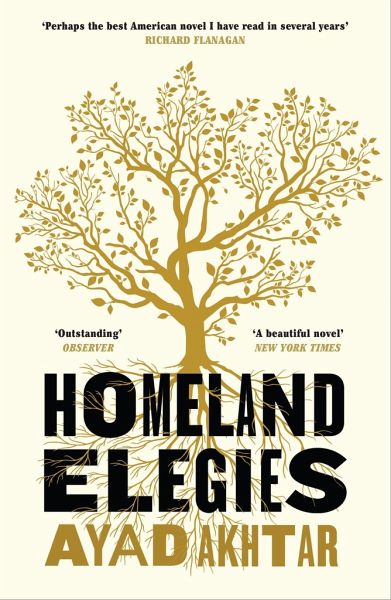
An American son and his immigrant father search for belonging - in post-Trump America, and in their relationship with each other
Ayad Akhtar is a playwright, novelist, the winner of the Pulitzer Prize and an Award in Literature from the American Academy of Arts and Letters. He is the author of AMERICAN DERVISH, published in over 20 languages and named a Kirkus Reviews Best Book of 2012. His plays include Disgraced (Lincoln Center, Broadway; Pulitzer Prize for Drama, Tony nomination) and The Invisible Hand (NYTW; Obie Award, Outer Critics Circle John Gassner Award, Olivier, and Evening Standard nominations). As a screenwriter, he was nominated for an Independent Spirit Award for Best Screenplay for The War Within.
Produktdetails
- Verlag: Headline / Tinder Press
- Artikelnr. des Verlages: 762689
- Seitenzahl: 368
- Erscheinungstermin: 8. Juli 2021
- Englisch
- Abmessung: 193mm x 127mm x 30mm
- Gewicht: 258g
- ISBN-13: 9781472276896
- ISBN-10: 1472276892
- Artikelnr.: 60772107
Herstellerkennzeichnung
Libri GmbH
Europaallee 1
36244 Bad Hersfeld
gpsr@libri.de
An urgent, intimate hybrid of memoir and fiction, HOMELAND ELEGIES thrusts us into the heart of a father-son relationship and in the process - improbably - does nothing short of laying bear the broken heart of our American dream turned reality TV nightmare... Stunning A M Homes
Just having finished reading “Homeland Elegies” by Ayad Akthar I am still ambivalent about Akhtar’s attitude.
On the one hand I am grateful about his narrative powers, the way he floods the reader with comments anticipating the winding path of his tales and plots, his deep look …
Mehr
Just having finished reading “Homeland Elegies” by Ayad Akthar I am still ambivalent about Akhtar’s attitude.
On the one hand I am grateful about his narrative powers, the way he floods the reader with comments anticipating the winding path of his tales and plots, his deep look at the state of affairs political, sociological the USA are in now; I like to read about the making of Ayad as an author analyzing his dreams, scribbling down notes of conversations he had; I appreciate to see the post 9/11 development from his perspective on the Muslim experience of it, however varied that may be.
On the other hand I am confused about him as a man who can be very sensitive about emotions and vulnerable and quite drastic when it comes to sexuality eg. “during my season of sexual fecklessness”. When he introduces the fact that he caught the pox from one of his lovers, he changes to the genre of the humorous rogue, describing the genitals of Asha, the US-pakistani lover who infected him with the pox virus very close to sexism. As if he finally has found a way to vent his anger at being dropped by her which he never dared to mention when she tells him that she had contracted pox.
So the man who uses such a variety of words seems utterly at a loss for words when it comes to describe his feelings about his love: is it pornographic, is it romantic? Asha is the woman during the season of his sexual fecklessness who comes closer to him than any other woman. He really wants her.
An other strange feature is his treatment of his relationship to Riaz Rind. The super rich manager of debt related financial asset funds like Timur Capital. Ayad precisely analyzes the US system of financial control. Riaz obviously takes revenge on US-municipalities who objected the building of mosques, Riaz’ dad unsuccessfully applied for by luring the town councilors into the trap of investing into junk bonds. However, Ayad himself becomes a millionaire by investing 300.000 $ inherited from his mother into the same mechanism that increased the debts of the aforementioned municipalities. How deep does Ayad’s criticism of the latest brand of capitalism go?
What I really do not like is the way Ayad conveys Riaz homosexuality: “I walked into his bedroom and found him on all fours with a penis in each end” (p. 156) He sells his friend to a pornographic image. Isn’t that rude? So what are Ayad’s morals? Does he realize how far he himself has gone to adapt the principles he in so many words criticizes?
Weniger
Antworten 1 von 1 finden diese Rezension hilfreich
