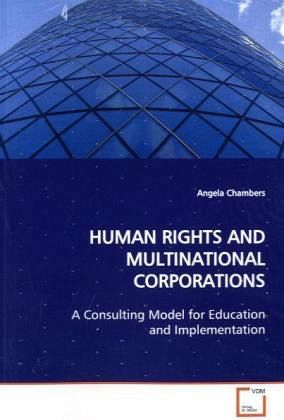
HUMAN RIGHTS AND MULTINATIONAL CORPORATIONS
A Consulting Model for Education and Implementation
Versandkostenfrei!
Versandfertig in 6-10 Tagen
79,00 €
inkl. MwSt.

PAYBACK Punkte
0 °P sammeln!

As corporations reach into the far corners of theworld, they can not only spread prosperity but alsoawareness of, and respect for, core internationalhuman rights norms.In this scholarly monograph, Dr. Chambers identifiesthe gaps in traditional approaches (which rely onpopular organisational change management or formalregulatory frameworks), identifies how and why thesecan ultimately fail, and explores how multinationalcorporations can play a key role in human rightseducation and implementation.In a case study of a single corporation operating inSouth East Asia, she examines current practices, ...
As corporations reach into the far corners of the
world, they can not only spread prosperity but also
awareness of, and respect for, core international
human rights norms.
In this scholarly monograph, Dr. Chambers identifies
the gaps in traditional approaches (which rely on
popular organisational change management or formal
regulatory frameworks), identifies how and why these
can ultimately fail, and explores how multinational
corporations can play a key role in human rights
education and implementation.
In a case study of a single corporation operating in
South East Asia, she examines current practices, with
all their complexities and challenges, and finds
among them the key roles and processes for a new
implementation model, one that will be invaluable for
any commercial organisation seeking to enhance human
rights in its field of influence.
An interdisciplinary approach and in-depth empirical
research makes this study both highly readable and a
rich resource for all those interested in human
rights education and corporate responsibility,
whether from a management, academic or practical
perspective.
world, they can not only spread prosperity but also
awareness of, and respect for, core international
human rights norms.
In this scholarly monograph, Dr. Chambers identifies
the gaps in traditional approaches (which rely on
popular organisational change management or formal
regulatory frameworks), identifies how and why these
can ultimately fail, and explores how multinational
corporations can play a key role in human rights
education and implementation.
In a case study of a single corporation operating in
South East Asia, she examines current practices, with
all their complexities and challenges, and finds
among them the key roles and processes for a new
implementation model, one that will be invaluable for
any commercial organisation seeking to enhance human
rights in its field of influence.
An interdisciplinary approach and in-depth empirical
research makes this study both highly readable and a
rich resource for all those interested in human
rights education and corporate responsibility,
whether from a management, academic or practical
perspective.
Andere Kunden interessierten sich für