
Life of Saint Mary Magdalene and of Her Sister Saint Martha
Versandkostenfrei!
Versandfertig in 1-2 Wochen
25,99 €
inkl. MwSt.

PAYBACK Punkte
13 °P sammeln!

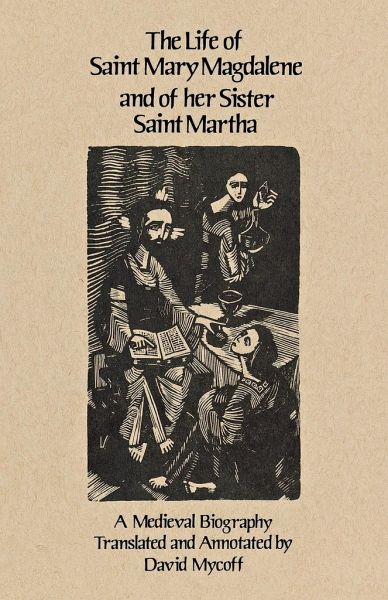
The cult of the penitent Magdalene grew rapidly in western Europe in the Middle Ages, as a number of shrines and church dedications attest. This medieval narration, tracing in imaginative detail the lives of the two sisters after the Resurrection of Christ, provides a model for christian women. Although modern Roman Catholicism and Protestantism agree with the early Eastern Church in distinguishing between Mary Magdalene, Mary of Bethany, and the penitent in Luke's Gospel, the western Church for many centuries identified them as one. To harmonize the various scriptural passages about the Marys...
The cult of the penitent Magdalene grew rapidly in western Europe in the Middle Ages, as a number of shrines and church dedications attest. This medieval narration, tracing in imaginative detail the lives of the two sisters after the Resurrection of Christ, provides a model for christian women. Although modern Roman Catholicism and Protestantism agree with the early Eastern Church in distinguishing between Mary Magdalene, Mary of Bethany, and the penitent in Luke's Gospel, the western Church for many centuries identified them as one. To harmonize the various scriptural passages about the Marys, Latin Christians constructed a coherent life story for this single Magdalene. It became a primary source of images and archetypal patterns for reflection on the Church's understanding of two fundamental matters: the right relations between the active and contemplative lives, and the process by which penitent sinners are reconciled to God and thereby freed for growth in the spiritual life. So deeply did the popular legend speak, and so strong was resistance to abandoning the self-understanding that it affirmed, that despite an increasingly impressive bod of critical-textual argument to the contrary, it was defended passionately from the first Renaissance doubts till after the end of the nineteenth century. This Life, long attributed to Rhabanus Maurus, takes the penitent Magdalene from the Holy Land by sea to Europe, and gives details of her life, her companions, and her devotions. Modern readers will find in it a fascinating reflection of the piety of generations of medieval Christians-layperson, monks, and clerics.
Andere Kunden interessierten sich für