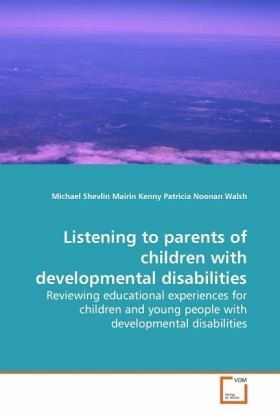
Listening to parents of children with developmental disabilities
Reviewing educational experiences for children and young people with developmental disabilities
Versandkostenfrei!
Versandfertig in 6-10 Tagen
49,00 €
inkl. MwSt.

PAYBACK Punkte
0 °P sammeln!

Within Ireland the inclusion of children withdevelopmental disabilities is of recent origin.Parents of these children were asked to review theireducational experiences. For many parents access wasfraught with difficulties as schools demonstrated alack of knowledge about the educational adaptationsrequired to include these children. However, manyteachers were willing to learn and the best listenedto parents and appreciated their unique knowledge oftheir children. Parents generally believed that theparticipation of their children in mainstream schoolswas not guaranteed as a right and their inclu...
Within Ireland the inclusion of children with
developmental disabilities is of recent origin.
Parents of these children were asked to review their
educational experiences. For many parents access was
fraught with difficulties as schools demonstrated a
lack of knowledge about the educational adaptations
required to include these children. However, many
teachers were willing to learn and the best listened
to parents and appreciated their unique knowledge of
their children. Parents generally believed that the
participation of their children in mainstream schools
was not guaranteed as a right and their inclusion was
conditional. As a result, parents actively campaigned
at local and national level to assert the rights of
their children to a mainstream education. While
government policy has changed to facilitate the
inclusion process parents can still encounter
difficulties in accessing inclusive learning
environments for their children.
developmental disabilities is of recent origin.
Parents of these children were asked to review their
educational experiences. For many parents access was
fraught with difficulties as schools demonstrated a
lack of knowledge about the educational adaptations
required to include these children. However, many
teachers were willing to learn and the best listened
to parents and appreciated their unique knowledge of
their children. Parents generally believed that the
participation of their children in mainstream schools
was not guaranteed as a right and their inclusion was
conditional. As a result, parents actively campaigned
at local and national level to assert the rights of
their children to a mainstream education. While
government policy has changed to facilitate the
inclusion process parents can still encounter
difficulties in accessing inclusive learning
environments for their children.
Andere Kunden interessierten sich für