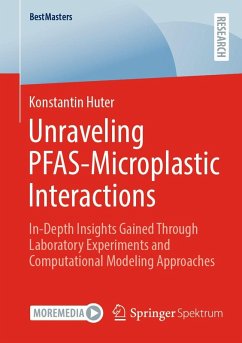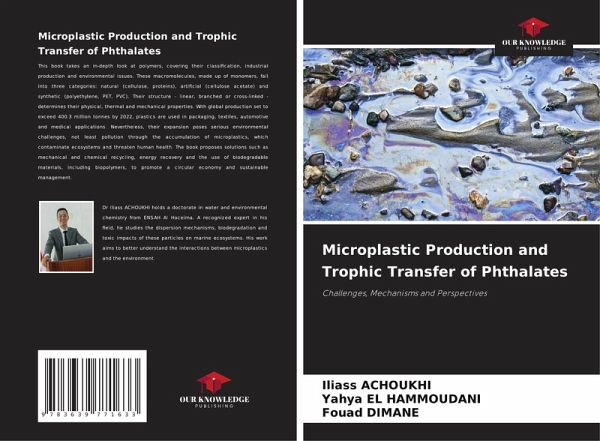
Microplastic Production and Trophic Transfer of Phthalates
Challenges, Mechanisms and Perspectives
Versandkostenfrei!
Versandfertig in 6-10 Tagen
29,99 €
inkl. MwSt.

PAYBACK Punkte
15 °P sammeln!

This book takes an in-depth look at polymers, covering their classification, industrial production and environmental issues. These macromolecules, made up of monomers, fall into three categories: natural (cellulose, proteins), artificial (cellulose acetate) and synthetic (polyethylene, PET, PVC). Their structure - linear, branched or cross-linked - determines their physical, thermal and mechanical properties. With global production set to exceed 400.3 million tonnes by 2022, plastics are used in packaging, textiles, automotive and medical applications. Nevertheless, their expansion poses serio...
This book takes an in-depth look at polymers, covering their classification, industrial production and environmental issues. These macromolecules, made up of monomers, fall into three categories: natural (cellulose, proteins), artificial (cellulose acetate) and synthetic (polyethylene, PET, PVC). Their structure - linear, branched or cross-linked - determines their physical, thermal and mechanical properties. With global production set to exceed 400.3 million tonnes by 2022, plastics are used in packaging, textiles, automotive and medical applications. Nevertheless, their expansion poses serious environmental challenges, not least pollution through the accumulation of microplastics, which contaminate ecosystems and threaten human health. The book proposes solutions such as mechanical and chemical recycling, energy recovery and the use of biodegradable materials, including biopolymers, to promote a circular economy and sustainable management.
Andere Kunden interessierten sich für