KI-Beratung Beta

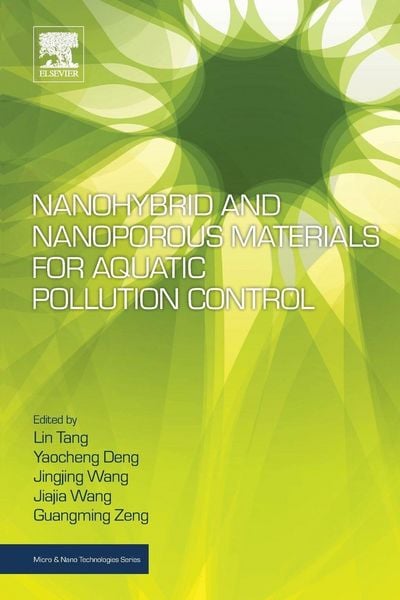
  • Produktbild: Nanohybrid and Nanoporous Materials for Aquatic Pollution Co
  • Produktbild: Nanohybrid and Nanoporous Materials for Aquatic Pollution Co

Nanohybrid and Nanoporous Materials for Aquatic Pollution Co

195,99 €

inkl. gesetzl. MwSt., Versandkostenfrei


Beschreibung

Nanohybrid and Nanoporous Materials for Aqueous Environmental Pollution Control gives a comprehensive treatment of fabrication methods and their application in environmental remediation, including adsorption, catalysis and signal transfer in pollutant detection. The design, fabrication and application...

Beschreibung

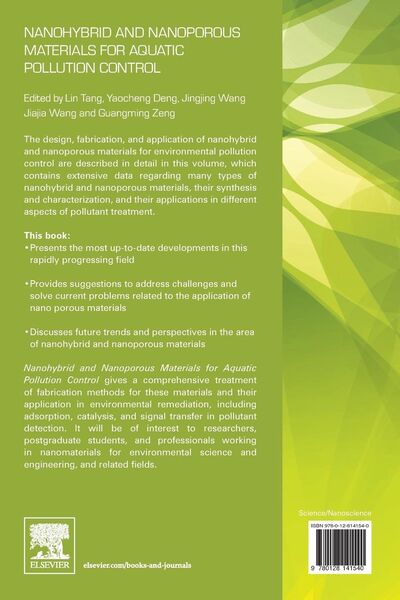
Nanohybrid and Nanoporous Materials for Aqueous Environmental Pollution Control gives a comprehensive treatment of fabrication methods and their application in environmental remediation, including adsorption, catalysis and signal transfer in pollutant detection. The design, fabrication and application of nanohybrid and nanoporous materials for environmental pollution control are described in detail, along with discussions on their synthesis, characterization, and applications in different aspects of pollutant treatment. Chapters introduce the design and synthesis of magnetic nanohybrid materials, advanced oxide process-photocatalytic degradation of environmental pollutants based on nanomaterials, and nanohybrids of iron based materials for reduction and oxidation of aqueous recalcitrant pollutant.

Finally, challenges and suggestions in the application of nanomaterials for environmental pollution control are discussed, as is an analysis of the future perspective of nanomaterials for environmental application.

Portrait

Lin Tang received her Ph.D. in 2009 from Hunan University, China, and then worked as a visiting scientist in Columbia University, USA for a year. She has been a professor in College of Environmental Science and Engineering, Hunan University since 2012. Her research interests include removal of heavy metals and refractory organics from aqueous environment using functional carbon/iron based nanohybrid or nanoporous materials, wetland remediation, as well as nanosensors for pollutant detection. She has published more than 140 scientific publications in international journals and is a named inventor of 45 issued China patents.Yaocheng Deng received his B.S. from Hunan University of Science and Technology in 2013. He is now a Ph.D. candidate under the supervision of Prof. Lin Tang at the College of Environmental Science and Engineering, Hunan University. His current research includes photocatalytic and photoelectrochemical removal of environmental pollutants.Jingjing Wang received her B.Eng. in environmental engineering from Lanzhou Jiaotong University in 2013, and her M.Eng. in environmental science and engineering from Hunan University in 2016. She is now a Ph.D. candidate under the supervision of Prof. Lin Tang in College of Environmental Science and Engineering, Hunan University. Currently, her research interests mainly focus on the removal of recalcitrant organic pollutants in water and sediment using functional nanohybrid and nanoporous materials.Jiajia Wang received his B.Eng. in environmental engineering from Anhui Polytechnic University. He is now studying for a PhD degree at Hunan University under the guidance of Prof. Lin Tang. His research interests are in remediation of water environments and also in water pollution control techniques, especially the photocatalysts used for organic pollutant decomposition in contaminated water.

Produktdetails

Einband

Taschenbuch

Erscheinungsdatum

18.10.2018

Herausgeber Lin Tang + weitere
Verlag Elsevier Science & Technology

Produktdetails

Einband

Taschenbuch

Erscheinungsdatum

18.10.2018

Herausgeber
Verlag Elsevier Science & Technology
Seitenzahl

324

Maße (L/B/H)

22,9/15,2/1,7 cm

Gewicht

436 g

Sprache

Englisch

ISBN

978-0-12-814154-0

EU-Ansprechpartner

Elsevier B.V.
Radarweg 29
1043 NX Amsterdam
NL
productsafety@elsevier.com

Herstelleradresse

Elsevier Science & Technology
London Wall 125
EC2Y 5AS London
GB
tradeorders@elsevier.com

Noch keine Bewertungen vorhanden

Verfassen Sie die erste Bewertung zu diesem Artikel

Helfen Sie anderen Kundinnen und Kunden durch Ihre Meinung.

Kundinnen und Kunden meinen

Bewertungen (0)

Die Leseprobe wird geladen.
  • Produktbild: Nanohybrid and Nanoporous Materials for Aquatic Pollution Co
  • Produktbild: Nanohybrid and Nanoporous Materials for Aquatic Pollution Co
  • 1. Magnetic nanohybrid materials for water pollutant removal
    2. Mesoporous carbon based composites for removal of recalcitrant pollutants from water
    3. Mesoporous carbon based composites for adsorption of heavy metals
    4. Mesoporous carbon based enzyme biocatalyst for organic pollutant degradation
    5. Nanohybrid photocatalysts for heavy metal pollution control
    6. Nanohybrid photocatalysts for recalcitrant organic pollutant degradation
    7. Iron based nanohybrids for aqueous recalcitrant pollutant treatment
    8. Nanohybrid materials based biosensors for heavy metal detection
    9. Nanoporous materials based sensors for organic pollutant detection
    10. Summary remarks and future perspective