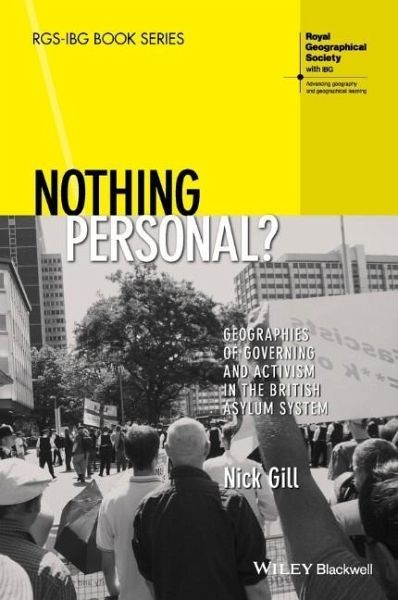
Nothing Personal?
Geographies of Governing and Activism in the British Asylum System
Versandkostenfrei!
Versandfertig in 2-4 Wochen
80,99 €
inkl. MwSt.
Weitere Ausgaben:

PAYBACK Punkte
40 °P sammeln!

In this groundbreaking new study, Nick Gill provides a conceptually innovative account of the ways in which indifference to the desperation and hardship faced by thousands of migrants fleeing persecution and exploitation comes about.Features original, unpublished empirical material from four Economic and Social Research Council (ESRC) funded projectsChallenges the consensus that border controls are necessary or desirable in contemporary societyDemonstrates how immigration decision makers are immersed in a suffocating web of institutionalized processes that greatly hinder their objectivity and ...
In this groundbreaking new study, Nick Gill provides a conceptually innovative account of the ways in which indifference to the desperation and hardship faced by thousands of migrants fleeing persecution and exploitation comes about.
Features original, unpublished empirical material from four Economic and Social Research Council (ESRC) funded projects
Challenges the consensus that border controls are necessary or desirable in contemporary society
Demonstrates how immigration decision makers are immersed in a suffocating web of institutionalized processes that greatly hinder their objectivity and limit their access to alternative perspectives
Theoretically informed throughout, drawing on the work of a range of social theorists, including Max Weber, Zygmunt Bauman, Emmanuel Levinas, and Georg Simmel
Features original, unpublished empirical material from four Economic and Social Research Council (ESRC) funded projects
Challenges the consensus that border controls are necessary or desirable in contemporary society
Demonstrates how immigration decision makers are immersed in a suffocating web of institutionalized processes that greatly hinder their objectivity and limit their access to alternative perspectives
Theoretically informed throughout, drawing on the work of a range of social theorists, including Max Weber, Zygmunt Bauman, Emmanuel Levinas, and Georg Simmel