
Our Little Roumanian Cousin
A Journey into the Heart of Roumania: Discovering Heritage and Identity

PAYBACK Punkte
0 °P sammeln!

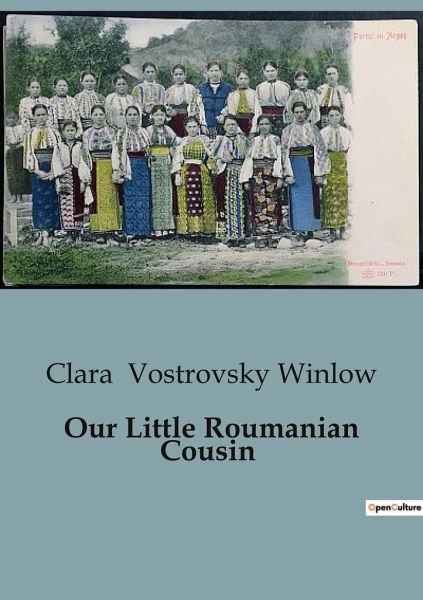
"Our Little Roumanian Cousin" by Clara Vostrovsky Winlow is a captivating exploration of Roumanian culture and history through the eyes of a young boy named Jonitza. The narrative begins with Jonitza recovering from an illness, leading to a doctor's prescription for fresh air and a stay in the countryside. This sets the stage for a journey that takes Jonitza and his mother from their home in Galatz to a farm in the Roumanian countryside. The story unfolds with vivid descriptions of the landscape, traditions, and daily life in Roumania. Jonitza's experiences on the farm, including interactions ...
"Our Little Roumanian Cousin" by Clara Vostrovsky Winlow is a captivating exploration of Roumanian culture and history through the eyes of a young boy named Jonitza. The narrative begins with Jonitza recovering from an illness, leading to a doctor's prescription for fresh air and a stay in the countryside. This sets the stage for a journey that takes Jonitza and his mother from their home in Galatz to a farm in the Roumanian countryside. The story unfolds with vivid descriptions of the landscape, traditions, and daily life in Roumania. Jonitza's experiences on the farm, including interactions with the farmer's family and participation in local customs, provide a rich tapestry of Roumanian culture. The narrative delves into historical anecdotes, such as the legend of King Stephen the Great and the origins of Moldavia's name, offering readers a glimpse into the country's storied past. As Jonitza becomes more immersed in rural life, he gains a deeper appreciation for his heritage. The climax of the story occurs when Jonitza joins his friend Nicolaia on a sheep herding expedition into the Carpathian Mountains, a journey that tests his resilience and adaptability. Through these experiences, Jonitza transforms from a listless child into a vibrant and engaged young boy, embodying the spirit and vitality of Roumania itself. The book concludes with a sense of fulfillment and a newfound connection to his roots, leaving readers with a profound understanding of Roumanian identity and the importance of cultural heritage.