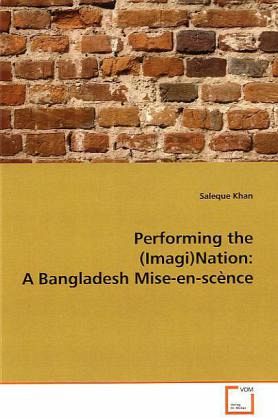
Performing the (Imagi)Nation: A Bangladesh Mise-en-scènce
Versandkostenfrei!
Versandfertig in 6-10 Tagen
52,99 €
inkl. MwSt.

PAYBACK Punkte
26 °P sammeln!

In Bangladesh, the street is the place whereconflicts over political, culturual and religious identities are played out.The political instability of Bangladesh in itself creates a national identitycrisis. The tension between the state and the cultural identity of thepeople are simultaneously reflected and challenged in theprotest performances of urban Bangladeshis. The interactions betweenpolitical culture and social culture give birth to invention andimagination. People perform the (imagi)nation. The finale is a clash between thepeople on the street and the people in power. Once the crisissub...
In Bangladesh, the street is the place where
conflicts over political,
culturual and religious identities are played out.
The political instability
of Bangladesh in itself creates a national identity
crisis. The tension
between the state and the cultural identity of the
people are
simultaneously reflected and challenged in the
protest performances of
urban Bangladeshis. The interactions between
political culture and
social culture give birth to invention and
imagination. People perform
the (imagi)nation. The finale is a clash between the
people on the
street and the people in power. Once the crisis
subsides and order is
temporarily stored, the whole process starts over
again. Given the
profound contradictions inherent in "being" Bangali
and "being"
Muslim, there does not seem to be a way to end the
repetition of this
Bangladesh social drama.
conflicts over political,
culturual and religious identities are played out.
The political instability
of Bangladesh in itself creates a national identity
crisis. The tension
between the state and the cultural identity of the
people are
simultaneously reflected and challenged in the
protest performances of
urban Bangladeshis. The interactions between
political culture and
social culture give birth to invention and
imagination. People perform
the (imagi)nation. The finale is a clash between the
people on the
street and the people in power. Once the crisis
subsides and order is
temporarily stored, the whole process starts over
again. Given the
profound contradictions inherent in "being" Bangali
and "being"
Muslim, there does not seem to be a way to end the
repetition of this
Bangladesh social drama.
Andere Kunden interessierten sich für