• Produktbild: Perturbation Techniques for Flexible Manipulators
  • Produktbild: Perturbation Techniques for Flexible Manipulators
Band 138

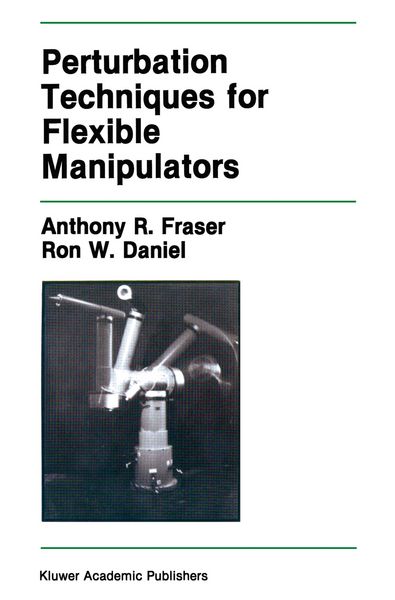
Perturbation Techniques for Flexible Manipulators

146,99 €

inkl. gesetzl. MwSt., Versandkostenfrei


Beschreibung

Produktdetails

Einband

Taschenbuch

Erscheinungsdatum

09.10.2012

Abbildungen

XVII, 275 p.

Verlag

Springer Us

Seitenzahl

275

Maße (L/B/H)

23,5/15,5/1,7 cm

Gewicht

452 g

Auflage

Softcover reprint of the original 1st ed. 1991

Sprache

Englisch

ISBN

978-1-4613-6775-8

Beschreibung

Produktdetails

Einband

Taschenbuch

Erscheinungsdatum

09.10.2012

Abbildungen

XVII, 275 p.

Verlag

Springer Us

Seitenzahl

275

Maße (L/B/H)

23,5/15,5/1,7 cm

Gewicht

452 g

Auflage

Softcover reprint of the original 1st ed. 1991

Sprache

Englisch

ISBN

978-1-4613-6775-8

Herstelleradresse

Springer-Verlag KG
Sachsenplatz 4-6
1201 Wien
AT

Email: ProductSafety@springernature.com

Noch keine Bewertungen vorhanden

Verfassen Sie die erste Bewertung zu diesem Artikel

Helfen Sie anderen Kundinnen und Kunden durch Ihre Meinung.

Kundinnen und Kunden meinen

Bewertungen (0)

  • Produktbild: Perturbation Techniques for Flexible Manipulators
  • Produktbild: Perturbation Techniques for Flexible Manipulators
  • 1 Introduction.- 1.1 Objectives.- 1.2 Book outline.- 2 Present trends in the dynamics and control of flexible manipulators.- 2.1 Introduction.- 2.2 Space Structures.- 2.3 Dynamics of flexible manipulators.- 2.4 Control of flexible manipulators.- 2.5 Conclusions.- 3 Dynamic model of a single-link flexible manipulator.- 3.1 Introduction.- 3.2 Analytic model of a single-link arm.- 3.3 Dynamic model based on natural modes.- 3.4 Dynamic models based on assumed modes.- 3.5 Models for control design.- 3.6 Conclusions.- 4 An experimental single-link flexible arm.- 4.1 Introduction.- 4.2 Experimental apparatus.- 4.3 Experimental identification of the system model.- 4.4 Verification of the arm model.- 4.5 Conclusions.- 5 Control design for the single-link arm.- 5.1 Introduction.- 5.2 Digital control design.- 5.3 Experimental flexible arm control.- 5.4 Conclusions.- 6 Multi-link flexible arm dynamics.- 6.1 Introduction.- 6.2 Dynamic model of a planar two-link flexible arm.- 6.3 Linearisation of the dynamic model.- 6.4 Properties of the linearised model.- 6.5 Variation of the linearised model with loading and configuration.- 6.6 Gravitational effects.- 6.7 Control of multi-link manipulators.- 6.8 Conclusions.- 7 A perturbation approach to changing dynamics.- 7.1 Introduction.- 7.2 Canonical perturbation theory.- 7.3 Extension of canonical perturbation theory to flexible systems.- 7.4 Perturbation analysis based on orthogonality of modes.- 7.5 Assumed modes formulation.- 7.6 Conclusions.- 8 Extended perturbation techniques.- 8.1 Introduction.- 8.2 Extended perturbation analysis.- 8.3 Discrete-time perturbation analysis.- 8.4 Corrective control design.- 8.5 Explicit control correction.- 8.6 Direct update of controller gains.- 8.7 Investigation of corrective control on the two-link arm model.- 8.8 A general perturbation-based control scheme.- 8.9 Conclusions.- 9 Looking to the future - high performance control.- 9.1 Introduction.- 9.2 Controller Design.- 9.3 The Provision of Feedforward.- 9.4 Feedback control.- A Symbols and Nomenclature.- B Experimental determination of arm parameters.- C Modal model of the single-link arm.- D Mass and stiffness terms for the two-link arm.- E Derivation of the assumed modes perturbation analysis.- F Transformation from a state-space to an input/output model.