PHYSICOCHEMICAL CHARACTERIZATION OF PLEUROTUS OSTREATUS VAR. FLORIDA
Characterization of white Shimeje grown on co-products from bean cultivation and beer production
Versandkostenfrei!
Versandfertig in 6-10 Tagen
29,99 €
inkl. MwSt.

PAYBACK Punkte
15 °P sammeln!

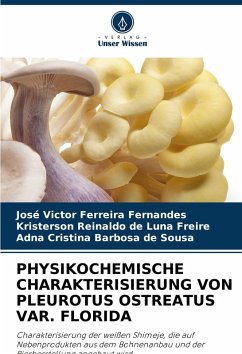
Edible mushrooms of the Pleurotus genus are widely recognized for their ecological, biotechnological and nutritional applications, and are the second most cultivated type of mushroom in the world. This study investigated the production of Pleurotus ostreatus var. florida grown in substrates based on agro-industrial by-products from bean cultivation and craft beer production. Four formulations were tested, varying only the type of supplement used: T1 (80% green bean pods without grains + 20% malt bagasse), T2 (T1 + 5% residual yeast), T3 (T1 + 10% hot trub) and T4 (T1 + 10% hop trub). The subst...
Edible mushrooms of the Pleurotus genus are widely recognized for their ecological, biotechnological and nutritional applications, and are the second most cultivated type of mushroom in the world. This study investigated the production of Pleurotus ostreatus var. florida grown in substrates based on agro-industrial by-products from bean cultivation and craft beer production. Four formulations were tested, varying only the type of supplement used: T1 (80% green bean pods without grains + 20% malt bagasse), T2 (T1 + 5% residual yeast), T3 (T1 + 10% hot trub) and T4 (T1 + 10% hop trub). The substrates and supplements were evaluated for pH, reducing, non-reducing and total sugars, ash, soluble solids, carbon (C), nitrogen (N) and C/N ratio. The mushrooms were analyzed for biological and production parameters, including moisture, protein, lipid, carbohydrate, ash and total calorie content.
Andere Kunden interessierten sich für