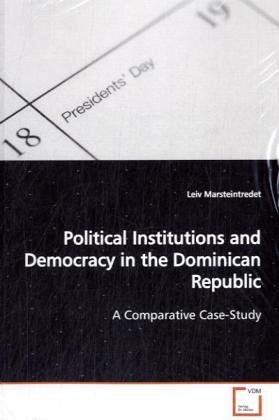
Political Institutions and Democracy in the Dominican Republic
A Comparative Case-Study
Versandkostenfrei!
Versandfertig in 6-10 Tagen
52,99 €
inkl. MwSt.

PAYBACK Punkte
26 °P sammeln!

This book deals with political institutions and theireffect on democracy in the Dominican Republic since1966. It provides a new analysis of the Dominicandemocracy, and uses case-study methods to generatenew and improve existing theories and concepts. Thebook develops new measurements of critical conceptssuch as deadlocks, and horizontal accountability, andprovides a thorough discussion of the concepts ofdemocracy, democratisation and theinstitutionalisation of democracy. Through ananalysis of the Dominican regime, author finds, andexplains why, the Dominican democracy has beenmisclassified by ...
This book deals with political institutions and their
effect on democracy in the Dominican Republic since
1966. It provides a new analysis of the Dominican
democracy, and uses case-study methods to generate
new and improve existing theories and concepts. The
book develops new measurements of critical concepts
such as deadlocks, and horizontal accountability, and
provides a thorough discussion of the concepts of
democracy, democratisation and the
institutionalisation of democracy. Through an
analysis of the Dominican regime, author finds, and
explains why, the Dominican democracy has been
misclassified by much of the comparative literature,
and argues that the regime still is not a full
democracy. The book then explains why the Dominican
Republic never fully democratised. The author finds
that while deadlocks did not put the Dominican
demoracy in peril, deadlocks tended to increase
presidential dominance and lower the level of
horizontal accountability, and that the institutions
inherited from the 1966 constitution was an obstacle
to a virtuous institutionalisation of democracy after
1978.
effect on democracy in the Dominican Republic since
1966. It provides a new analysis of the Dominican
democracy, and uses case-study methods to generate
new and improve existing theories and concepts. The
book develops new measurements of critical concepts
such as deadlocks, and horizontal accountability, and
provides a thorough discussion of the concepts of
democracy, democratisation and the
institutionalisation of democracy. Through an
analysis of the Dominican regime, author finds, and
explains why, the Dominican democracy has been
misclassified by much of the comparative literature,
and argues that the regime still is not a full
democracy. The book then explains why the Dominican
Republic never fully democratised. The author finds
that while deadlocks did not put the Dominican
demoracy in peril, deadlocks tended to increase
presidential dominance and lower the level of
horizontal accountability, and that the institutions
inherited from the 1966 constitution was an obstacle
to a virtuous institutionalisation of democracy after
1978.
Andere Kunden interessierten sich für