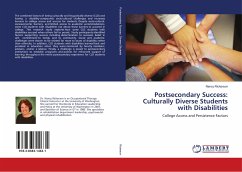
Postsecondary Success: Culturally Diverse Students with Disabilities
College Access and Persistence Factors
Versandkostenfrei!
Versandfertig in 6-10 Tagen
45,99 €
inkl. MwSt.

PAYBACK Punkte
23 °P sammeln!

The combined factors of being culturally and linguistically diverse (CLD) and having a disability compounds socio-cultural challenges and increases barriers to college access and success for students. Despite socio-cultural, socioeconomic barriers, and limited access to academic accommodations, some CLD students with disabilities rise above these barriers to succeed in college. This research study explores how some CLD students with disabilities succeed when others fail to persist. Study participants identified factors supporting success including determination to succeed, belief in self, comm...
The combined factors of being culturally and linguistically diverse (CLD) and having a disability compounds socio-cultural challenges and increases barriers to college access and success for students. Despite socio-cultural, socioeconomic barriers, and limited access to academic accommodations, some CLD students with disabilities rise above these barriers to succeed in college. This research study explores how some CLD students with disabilities succeed when others fail to persist. Study participants identified factors supporting success including determination to succeed, belief in self, commitment to family, and to community. Social and academic challenges were shown to be related far more to issues of disability rather than ethnicity. In addition, CLD students with disabilities learned best and persisted in education when they were mentored by faculty members, advisors, and/or a relative. Finally, a challenge is posed to postsecondary institutions to establish programs and policies for enhanced support of learning throughout the entire postsecondary experience for CLD students with disabilities.
Andere Kunden interessierten sich für