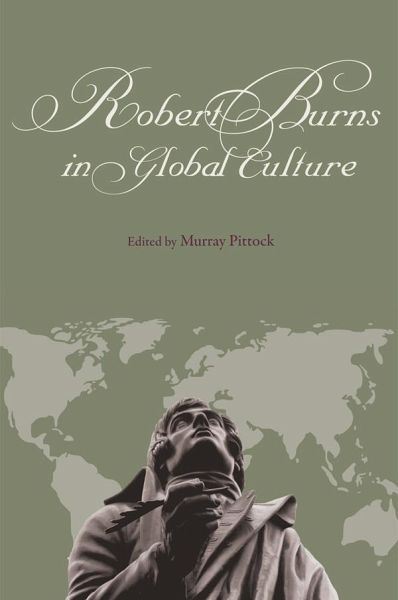
Robert Burns in Global Culture
Versandkostenfrei!
Versandfertig in über 4 Wochen
118,99 €
inkl. MwSt.
Weitere Ausgaben:

PAYBACK Punkte
59 °P sammeln!

Robert Burns in Global Culture is a collection that breaks new ground in treating Burns's poetry and influence in an international context. Widely recognized as poet of global significance in the nineteenth century, Burns's reputation has suffered from the critical turns in Romanticism since 1945 and is only now beginning to be seen in its proper context. Following on from the celebrations across the world to mark Burns' 250th anniversary in 2009, this collection asks questions concerning the nature of Burns's global influence in the United States, Europe and the Commonwealth, examines the extraordinary ways in which his writing combines a distinctively progressive agenda with deceptively traditional styles, and emplaces his reputation at the heart of questions of American exceptionalism, European democracy, British imperial identities, Italian politics, French literary history, questions of desire and sexuality, the Burns Supper and the extraordinary cult of Burns statues. 'Robert Burns in Global Culture' combines literary criticism, history, cultural theory and comparative literature to create a set of powerful, new and unique directions in the study of this major Romantic poet.
Robert Burns has been a key figure in Scottish identity globally since his death in 1796. But he has always been much more than that. In America, his admirers have included Emerson, President Lincoln, Maya Angelou and many others, for Burns was long held to be a friend to the American way of life, an opponent of kings and tyranny, and someone who proved that the values that built the United States were not extinct in Europe. In Europe itself, Burns was seen as both an authentic voice of the people-a representative of their way of life-and a progressive, informed and radical writer. In the British Empire and later the Commonwealth, he was a symbol of Scottish nationality and sociability abroad. In more recent times he has been seen as a poet of universal brotherhood and sisterhood. It takes a great poet to be all things to all people, and to be interpreted so variously worldwide. One of the extraordinary things about Burns is that while his books were sold globally, while he remains the second most translated Scottish author of all time, and when even the USSR issued a stamp in his honor, the postwar academic world turned away from a poet whom it had previously recognized as a major figure. Burns disappeared from accounts of Romanticism, and such meager helpings of critical attention as he received were often directed towards his supposed status as a laboring class or dialect poet, a status which is completely at odds with Burns' sophisticated control of register. Robert Burns in Global Culture is an ambitious book. Drawing on the work of leading experts from Scotland, England, North America, France, Germany and Spain, it analyses the reasons for Burns' critical decline, examines the phenomenon of Burns' global influence on areas from Italian politics to American identity, and places Burns' influence, reputation and unique qualities as a poet within a framework of reference which blends rigorous intellectual inquiry into the poet and his poetry with analyses of popular culture.