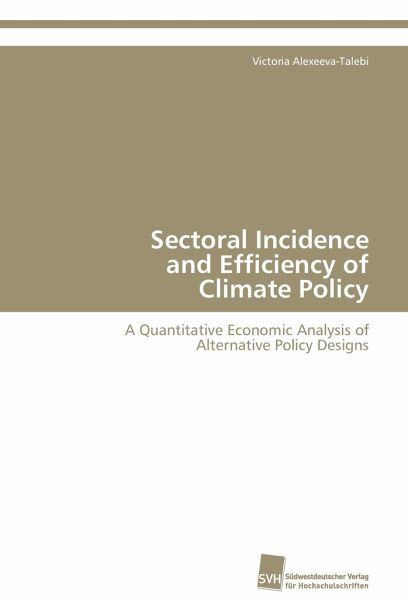
Sectoral Incidence and Efficiency of Climate Policy
A Quantitative Economic Analysis of Alternative Policy Designs
Versandkostenfrei!
Versandfertig in 6-10 Tagen
59,99 €
inkl. MwSt.

PAYBACK Punkte
30 °P sammeln!

The EU advocates minimising potentially significant competitiveness losses in energy-intensive industries as a politically feasible approach to climate policy. This book analyses industry-distributional effects of European climate policy and evaluates different policy designs tailored to neutralise detrimental impacts of ambitious climate actions on competitiveness of domestic energy-intensive branches. The numerical analysis shows that alternative policy designs may considerably differ in terms of macroeconomic implications. Unilateral policies, i.e. inter-sectoral carbon price differentiatio...
The EU advocates minimising potentially significant competitiveness losses in energy-intensive industries as a politically feasible approach to climate policy. This book analyses industry-distributional effects of European climate policy and evaluates different policy designs tailored to neutralise detrimental impacts of ambitious climate actions on competitiveness of domestic energy-intensive branches. The numerical analysis shows that alternative policy designs may considerably differ in terms of macroeconomic implications. Unilateral policies, i.e. inter-sectoral carbon price differentiation strategies and different forms of border adjustments, have the potential to neutralise adverse implications on competitiveness of energy-intensive industries in Europe. But these measures can induce significant economic inefficiencies. The gradual movement towards a global carbon regime represents a superior alternative to unilateral measures. It allows realising a cost-efficient and globally effective climate policy while limiting negative impacts on competitiveness of domestic industries.
Andere Kunden interessierten sich für