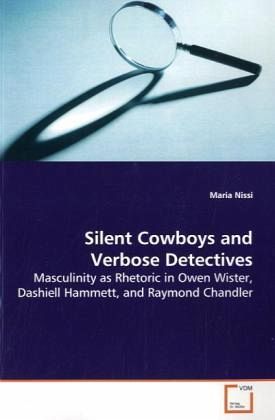
Silent Cowboys and Verbose Detectives
Masculinity as Rhetoric in Owen Wister, Dashiell Hammett, and Raymond Chandler
Versandkostenfrei!
Versandfertig in 6-10 Tagen
32,99 €
inkl. MwSt.

PAYBACK Punkte
16 °P sammeln!

In the early part of the twentieth century, popular fiction and film in the form of Westerns and the noir detective story cultivated brands of masculinity through archetypal male characters. This project investigates the countervailing tradition between the language-resistant cowboy figure and his more verbally-inclined successor, the detective fiction hero. The onslaught of modernization that transformed the United States in the early 1900s created a need for a new kind of hero, one akin to the cowboy hero in character, bravery, and wit, yet seemingly birthed from urbanity as undeniably as th...
In the early part of the twentieth century, popular
fiction and film in the form of Westerns and the
noir detective story cultivated brands of
masculinity through archetypal male characters.
This project investigates the countervailing
tradition between the language-resistant cowboy
figure and his more verbally-inclined successor, the
detective fiction hero. The onslaught of
modernization that transformed the United States in
the early 1900s created a need for a new kind of
hero, one akin to the cowboy hero in character,
bravery, and wit, yet seemingly birthed from
urbanity as undeniably as the cowboy was birthed
from the open range. The primarily linguistic work
of Dashiell Hammett s Continental Op and Raymond
Chandler s Philip Marlowe indicates that the
detective s urbanite status necessitates a different
method of performing his work. Accordingly, he
negotiates his urban world with a linguistic prowess
quite different from the cowboy s preference for
action. The study further suggests a socio-
historical connection between a distinctly American
masculine code of silence and a lack of verbal
diplomacy in U.S. foreign policy.
fiction and film in the form of Westerns and the
noir detective story cultivated brands of
masculinity through archetypal male characters.
This project investigates the countervailing
tradition between the language-resistant cowboy
figure and his more verbally-inclined successor, the
detective fiction hero. The onslaught of
modernization that transformed the United States in
the early 1900s created a need for a new kind of
hero, one akin to the cowboy hero in character,
bravery, and wit, yet seemingly birthed from
urbanity as undeniably as the cowboy was birthed
from the open range. The primarily linguistic work
of Dashiell Hammett s Continental Op and Raymond
Chandler s Philip Marlowe indicates that the
detective s urbanite status necessitates a different
method of performing his work. Accordingly, he
negotiates his urban world with a linguistic prowess
quite different from the cowboy s preference for
action. The study further suggests a socio-
historical connection between a distinctly American
masculine code of silence and a lack of verbal
diplomacy in U.S. foreign policy.
Andere Kunden interessierten sich für