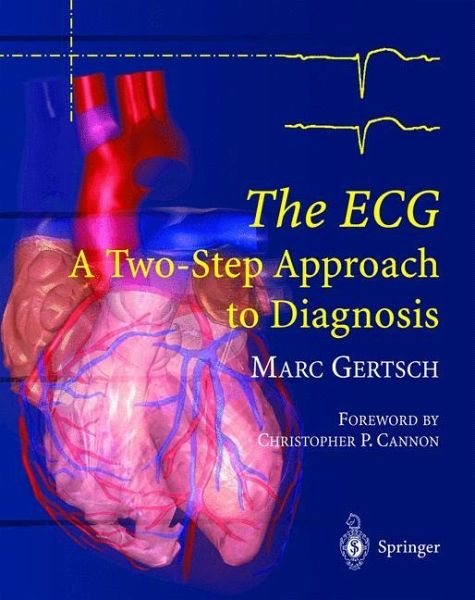
The ECG
A Two-Step Approach to Diagnosis
Mitarbeit: Cannon, C.P.

PAYBACK Punkte
69 °P sammeln!

This book is the culmination of a lifetime of involvement with invasive and non-invasive cardiology by one of Switzerland's leading cardiologists.
Professor Gertsch covers both clinically relevant ECGs and very interesting rarer cases of the normal and the exercise ECG, making this work extremely comprehensive. Numerous ECGs and two-color drawings illustrate the text, which is also brought closer to the reader by means of over fifty case reports.
Ease of reference is facilitated by the division of the text into separate sections "At a Glance" for readers who want quick information, and "The Full Picture" for readers wishing to go into exhaustive detail.
Professor Gertsch covers both clinically relevant ECGs and very interesting rarer cases of the normal and the exercise ECG, making this work extremely comprehensive. Numerous ECGs and two-color drawings illustrate the text, which is also brought closer to the reader by means of over fifty case reports.
Ease of reference is facilitated by the division of the text into separate sections "At a Glance" for readers who want quick information, and "The Full Picture" for readers wishing to go into exhaustive detail.
Introduction by Bernhard Meier . . . . . . . . . . . . . . . . . . . . . . . . . . . . . . . . . . . . . . . . . . . . . . . . . . . . . . . . . . . x Acknowledgements . . . . . . . . . . . . . . . . . . . . . . . . . . . . . . . . . . . . . . . . . . . . . . . . . . . . . . . . . . . . . . . . . . . . . . xi Abbreviations . . . . . . . . . . . . . . . . . . . . . . . . . . . . . . . . . . . . . . . . . . . . . . . . . . . . . . . . . . . . . . . . . . . . . . . . . . . xxxiii Theoretical Basics and Practical Approach Introduction and Concept of the Book . . . . . . . . . . . . . . . . . . . . . . . . . . . . . . . . . . . . . . . . . . . . . . . . . . . . . . . . . 1 Introduction . . . . . . . . . . . . . . . . . . . . . . . . . . . . . . . . . . . . . . . . . . . . . . . . . . . . . . . . . . . . . . . . . . . . . . . . . . . 1 The Value of'the ECG' Today . . . . . . . . . . . . . . . . . . . . . . . . . . . . . . . . . . . . . . . . . . . . . . . . . . . . . . . . . . Limitations of the Pattern ECG . . . . . . . . . . . . . . . . . . . . . . . . . . . . . . . . . . . . . . . . . . . . . . . . . . . . . . . . . 1 Conclusions . . . . . . . . . . . . . . . . . . . . . . . . . . . . . . . . . . . . . . . . . . . . . . . . . . . . . . . . . . . . . . . . . . . . . . . . 2 Concept of the Book . . . . . . . . . . . . . . . . . . . . . . . . . . . . . . . . . . . . . . . . . . . . . . . . . . . . . . . . . . . . . . . . . . . . . 2 Theoretical Basics . . . . . . . . . . . . . . . . . . . . . . . . . . . . . . . . . . . . . . . . . . . . . . . . . . . . . . . . . . . . . . . . . . . . . . . . 3 Anatomy of the Impulse Formation and Impulse Conduction Systems . . . . . . . . . . . . . . . . . . . . . . . . 3 2 Normal Impulse Conduction . . . . . . . . . . . . . . . . . . . . .. . . . . . . . . . . . . . . . . . . . . . . . . . . . . . . . . . . . . 3 3 Action Potential of a Single Cell ofWorking Myocardium and its Relation to Ion Flows . . . . . . . . . . 4 4 Atrial Depolarization and Repolarization . . . . . . . . . . . . . . . . . . . . . . . . . . . . . . . . . . . . . . . . . . . . . . . . 5 5 Ventricular Depolarization and Repolarization . . . . . . . . . . . . . . . . . . . . . . . . . . . . . . . . . . . . . . . . . . . 6 5. 1 Vectors and Vectorcardiogram . . . . . . . . . . . . . . . . . . . . . . . . . . . . . . . . . . . . . . . . . . . . . . . . . . . . . 6 5. 2 Simplified QRS Vectors . . . . . . . . . . . . . . . . . . . . . . . . . . . . . . . . . . . . . . . . . . . . . . . . . . . . . . . . . . . 6 6 Lead Systems . . . . . . . . . . . . . . . . . . . . . . . . . . . . . . . . . . . . . . . . . . . . . . . . . . . . . . . . . . . . . . . . . . . . . . . 7 7 'Magnifying Glass' and 'Proximity' Effects . . . . . . . . . . . . . . . . . . . . . . . . . . . . . . . . . . . . . . . . . . . . . . . . 7 8 Refractory Period . . . . . . . . . . . . . . . . . . . . . . . . . . . . . . . . . . . . . . . . . . . . . . . . . . . . . . . .. . . . . . . . . . . . 9 9 Nomenclature of the ECG . . . . . . . . . . . . . . . . . . . . . . . . . . . . . . . . . . . . . . . . . . . . . . . . . . . . . . . . . . . . . 9 References . . . . . . . . . . . . . . . . . . . . . . . . . . . . . . . . . . . . . . . . . . . . . . . . . . . . . . . . . . . . . . . . . . . . . . . . . . . . . 11 Practical Approach . . . . . . . . . . . . . . . . . . . . . . . . . . . . . . . . . . . . . . . . . . . . . . . . . . . . . . . . . . . . . . . . . . . . . . . . 13 1 The Practical Approach . . . . . . . . . . . . . . . . . . . . . . . . . . . . . . . . . . . . . . . .. . . . . . . . . . . . . . . . . . . . . . . 14 1. 1 Definitive ECG diagnosis . . . . . . . . . . . . . . . . . . . . . . . . . . . . . . . . . . . . . . . . . . . . . . . . . . . . . . . . . 15 xiii 2 Practical approach . . . . . . . . . . . . . . . . . . . . . . . . . . . . . . . . . . . . . . . . . . . . . . . . . . . . . . . . . . . . . . . . . . . 16 2. 1 Analysis of rhythm . . . . . . . . .