The European Language Portfolio in Armenian Primary Education
The Evaluation of the Effectiveness of the Armenian ELP Model for Young Learners as a Pedagogical and Assessment Instrument
Versandkostenfrei!
Versandfertig in 6-10 Tagen
32,99 €
inkl. MwSt.

PAYBACK Punkte
16 °P sammeln!

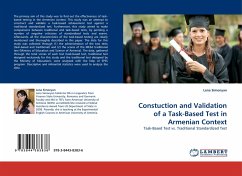
The aim of this study was to conduct a qualitative evaluation of the effectiveness of the European Language Portfolio (ELP) as a pedagogical and assessment tool with reference to a particular learning/teaching context (primary schools in Armenia) and from the perspective of those directly engaged in working with the ELP. The ELP appeared to function as an efficient instrument for assessing and documenting language proficiency and as a valuable tool for improving language learning and developing learner autonomy. The ELP was found to be fulfilling most of its basic pedagogical functions. The ex...
The aim of this study was to conduct a qualitative
evaluation of the effectiveness of the European
Language Portfolio (ELP) as a pedagogical and
assessment tool with reference to a particular
learning/teaching context (primary schools in
Armenia) and from the perspective of those directly
engaged in working with the ELP. The ELP appeared
to function as an efficient instrument for assessing
and documenting language proficiency and as a
valuable tool for improving language learning and
developing learner autonomy. The ELP was found to be
fulfilling most of its basic pedagogical functions.
The existing issues mainly related to the
integration of the ELP into regular class work, the
unclear status of the ELP, and its perceived
incompatibility with the official curriculum. Based
on the findings, the study calls for further
supportive actions on the part of various
stakeholders that appear to be necessary for the
successful large-scale implementation of the ELP,
with its potential to serve as basis for
benchmarking and quality control in Armenian
language education.
evaluation of the effectiveness of the European
Language Portfolio (ELP) as a pedagogical and
assessment tool with reference to a particular
learning/teaching context (primary schools in
Armenia) and from the perspective of those directly
engaged in working with the ELP. The ELP appeared
to function as an efficient instrument for assessing
and documenting language proficiency and as a
valuable tool for improving language learning and
developing learner autonomy. The ELP was found to be
fulfilling most of its basic pedagogical functions.
The existing issues mainly related to the
integration of the ELP into regular class work, the
unclear status of the ELP, and its perceived
incompatibility with the official curriculum. Based
on the findings, the study calls for further
supportive actions on the part of various
stakeholders that appear to be necessary for the
successful large-scale implementation of the ELP,
with its potential to serve as basis for
benchmarking and quality control in Armenian
language education.
Andere Kunden interessierten sich für