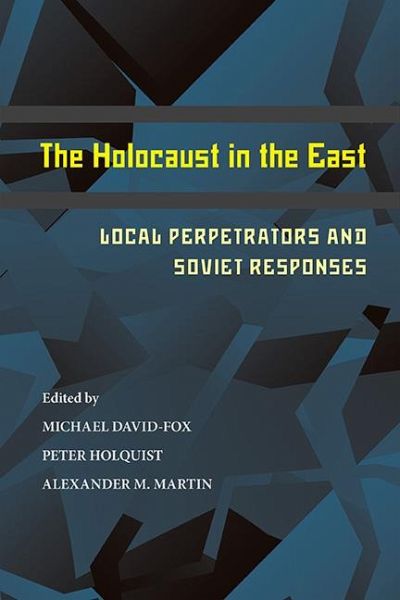
The Holocaust in the East
Local Perpetrators and Soviet Responses
Herausgeber: David-Fox, Michael; Martin, Alexander; Holquist, Peter
Versandkostenfrei!
Versandfertig in über 4 Wochen
52,99 €
inkl. MwSt.

PAYBACK Punkte
26 °P sammeln!

Silence has many causes: shame, embarrassment, ignorance, a desire to protect. The silence that has surrounded the atrocities committed against the Jewish population of Eastern Europe and the Soviet Union during World War II is particularly remarkable given the scholarly and popular interest in the war. It, too, has many causes--of which antisemitism, the most striking, is only one. When, on July 10, 1941, in the wake of the German invasion of the Soviet Union, local residents enflamed by Nazi propaganda murdered the entire Jewish population of Jedwabne, Poland, the ferocity of the attack horr...
Silence has many causes: shame, embarrassment, ignorance, a desire to protect. The silence that has surrounded the atrocities committed against the Jewish population of Eastern Europe and the Soviet Union during World War II is particularly remarkable given the scholarly and popular interest in the war. It, too, has many causes--of which antisemitism, the most striking, is only one. When, on July 10, 1941, in the wake of the German invasion of the Soviet Union, local residents enflamed by Nazi propaganda murdered the entire Jewish population of Jedwabne, Poland, the ferocity of the attack horrified their fellow Poles. The denial of Polish involvement in the massacre lasted for decades. > Based on Soviet commission reports, news media, and other archives, the contributors examine the factors that led certain local residents to participate in the extermination of their Jewish neighbors; the interaction of Nazi occupation regimes with various sectors of the local population; the ambiguities of Soviet press coverage, which at times reported and at times suppressed information about persecution specifically directed at the Jews; the extraordinary Soviet efforts to document and prosecute Nazi crimes and the way in which the Soviet state's agenda informed that effort; and the lingering effects of silence about the true impact of the Holocaust on public memory and state responses.
Andere Kunden interessierten sich für