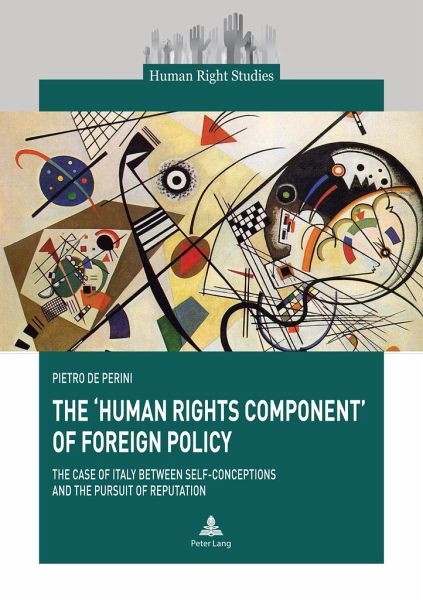
The 'Human Rights Component' of Foreign Policy
The Case of Italy between Self-conceptions and the Pursuit of Reputation
Versandkostenfrei!
Versandfertig in 6-10 Tagen
40,95 €
inkl. MwSt.
Weitere Ausgaben:

PAYBACK Punkte
0 °P sammeln!

Framed into the broader conceptual debate that addresses the controversialrole of human rights in the foreign policies of states, this bookaims to critically investigate whether, how and to what extent humanrights matter in the definition of Italy's external action. The focus of thisstudy, which considers a period ranging from the end of the Cold Warto the outbreak of the Covid-19 pandemic, is placed on the whole 'humanrights component' of foreign policy, which is intended as the combinationof three dimensions that are part of the same policy effort butcan analytically be distinguished among t...
Framed into the broader conceptual debate that addresses the controversial
role of human rights in the foreign policies of states, this book
aims to critically investigate whether, how and to what extent human
rights matter in the definition of Italy's external action. The focus of this
study, which considers a period ranging from the end of the Cold War
to the outbreak of the Covid-19 pandemic, is placed on the whole 'human
rights component' of foreign policy, which is intended as the combination
of three dimensions that are part of the same policy effort but
can analytically be distinguished among them: 'institutional dialogue';
'multilateral initiative' and 'bilateral emphasis'. This book investigates
the consistency of this whole foreign policy component between the
content and scope of the human rights discourse of Italian foreign policy-
makers domestically and internationally and the actual efforts put
in place by the country to advance the global human rights agenda, its
institutions and procedures in both multilateral and bilateral settings.
role of human rights in the foreign policies of states, this book
aims to critically investigate whether, how and to what extent human
rights matter in the definition of Italy's external action. The focus of this
study, which considers a period ranging from the end of the Cold War
to the outbreak of the Covid-19 pandemic, is placed on the whole 'human
rights component' of foreign policy, which is intended as the combination
of three dimensions that are part of the same policy effort but
can analytically be distinguished among them: 'institutional dialogue';
'multilateral initiative' and 'bilateral emphasis'. This book investigates
the consistency of this whole foreign policy component between the
content and scope of the human rights discourse of Italian foreign policy-
makers domestically and internationally and the actual efforts put
in place by the country to advance the global human rights agenda, its
institutions and procedures in both multilateral and bilateral settings.
Andere Kunden interessierten sich für