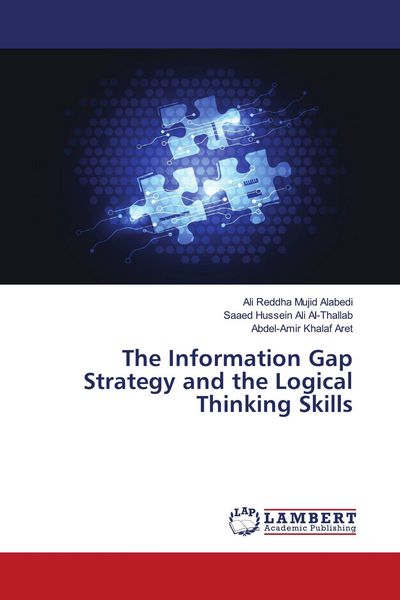
The Information Gap Strategy and the Logical Thinking Skills
-
- Englisch ausgewählt
31,99 €
UVP
36,90 €
inkl. gesetzl. MwSt.,
Beschreibung
Produktdetails
Einband
Taschenbuch
Erscheinungsdatum
10.07.2019
Verlag
LAP LAMBERT Academic PublishingSeitenzahl
124
Maße (L/B/H)
22/15/0,9 cm
Gewicht
203 g
Sprache
Englisch
ISBN
978-620-0-23371-4
The first chapter deals with active learning theoretical basis and importance, and the role of both students and teachers as well as the most important strategies of modern active learning and focused on the information gap strategy and its types and benefits and steps with an example applied. Chapter two examines logical thinking, its characteristics, characteristics, importance, and logical thinking skills. The third chapter include an applied study in the sciences ((the effect of the information gap strategy in the achievement and logical thinking skills among the first grade students in the intermediate science), among them the type of experimental design chosen where experimental design was adopted with partial control, age of months, parental achievement, prior knowledge, and intelligence), the internal safety of the two research groups, how to construct the test, and the test of logical thinking skills, as well as the procedures for applying the experiment. At the end of the book are the most important sources used in the book.The first chapter deals with active learning theoretical basis and importance, and the role of both students and teachers as well as the most important strategies of modern active learning and focused on the information gap strategy and its types and benefits and steps with an example applied. Chapter two examines logical thinking, its characteristics, characteristics, importance, and logical thinking skills. The third chapter include an applied study in the sciences ((the effect of the information gap strategy in the achievement and logical thinking skills among the first grade students in the intermediate science), among them the type of experimental design chosen where experimental design was adopted with partial control, age of months, parental achievement, prior knowledge, and intelligence), the internal safety of the two research groups, how to construct the test, and the test of logical thinking skills, as well as the procedures for applying the experiment. At the end of the book are the most important sources used in the book.
Noch keine Bewertungen vorhanden
Verfassen Sie die erste Bewertung zu diesem Artikel
Helfen Sie anderen Kundinnen und Kunden durch Ihre Meinung.
Kurze Frage zu unserer Seite
Vielen Dank für dein Feedback
Wir nutzen dein Feedback, um unsere Produktseiten zu verbessern. Bitte habe Verständnis, dass wir dir keine Rückmeldung geben können. Falls du Kontakt mit uns aufnehmen möchtest, kannst du dich aber gerne an unseren Kund*innenservice wenden.
zum Kundenservice