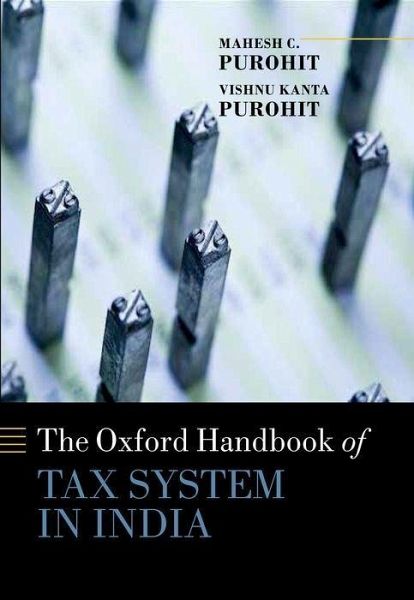
The Oxford Handbook of Tax System in India
An Analysis of Tax Policy and Governance
Versandkostenfrei!
Versandfertig in über 4 Wochen
65,99 €
inkl. MwSt.

PAYBACK Punkte
33 °P sammeln!

This book evaluates the existing taxes levied both by the Centre and the State Governments and puts forth the second generation reforms that are need of hour. More importantly, it presents the reforms through the introduction of goods and services tax (GST) and Direct Tax Code (DTC) to have a robust tax system in India.
The existing tax system in India yields a low tax-GDP ratio as a major proportion of the population is dependent on agriculture which is practically untaxed. Similarly the service sector, which has the largest contribution in GDP, is also not fully taxed. Due to the structural reforms that were initiated in the nineties, the growth in revenue from indirect taxes has come down while the revenue from direct taxes has showed an accelerated growth. This study on the tax system in India evaluates the existing taxes that are being levied by both the Centre and the State Governments. It analyses tax structure in terms of rates, base, slabs, and exemptions, and its administration and operations to provide estimates of revenue's growth rate and buoyancy and tax effort. The authors not only provide detailed data on the existing structure and administration but also discuss the second generation reforms to address the issues that have emerged since the earlier reforms in 1991. More particularly they discuss the significant and important Direct Tax Code (DTC) and Goods and Services Tax (GST) that the Indian government is likely to introduce soon. They stress that these tax reforms will help India make further progress towards an open economy as well as ensure that Indian traders and manufacturers become more competitive and efficient in the international market.
Andere Kunden interessierten sich für