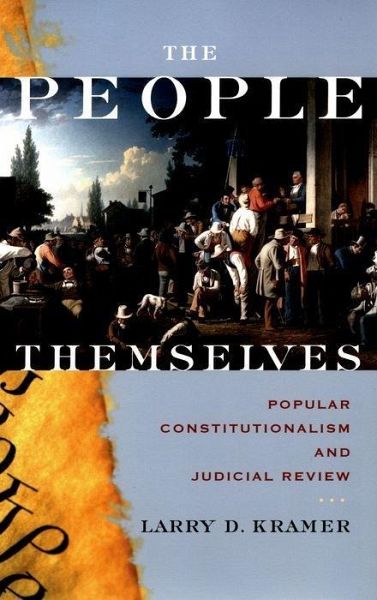
The People Themselves
Popular Constitutionalism and Judicial Review
Versandkostenfrei!
Versandfertig in 1-2 Wochen
49,99 €
inkl. MwSt.
Weitere Ausgaben:

PAYBACK Punkte
25 °P sammeln!

In this groundbreaking interpretation of America's founding and of its entire system of judicial review, Larry Kramer reveals that the colonists fought for and birthed a very different system - and held a very different understanding of citizenship - than Americans believe to be the norm today. "Popular sovreignty" was no historical abstraction nor was the notion of "the people" invoked largely as a flip rhetorical convenience on the campaign trail. Important trails and the prospective passage of influential legislation such as the Alien Act - which granted a president the power to imprison or...
In this groundbreaking interpretation of America's founding and of its entire system of judicial review, Larry Kramer reveals that the colonists fought for and birthed a very different system - and held a very different understanding of citizenship - than Americans believe to be the norm today. "Popular sovreignty" was no historical abstraction nor was the notion of "the people" invoked largely as a flip rhetorical convenience on the campaign trail. Important trails and the prospective passage of influential legislation such as the Alien Act - which granted a president the power to imprison or even deport immigrants - were met with vigorous public debate. The outcomes were greeted with celebratory feasts and bonfires, or riotous resistance. In short, Americans drew a clear parallel between the law and the lived reality of their daily existence. Their self-sovreignty in law as much as politics was active not abstract,