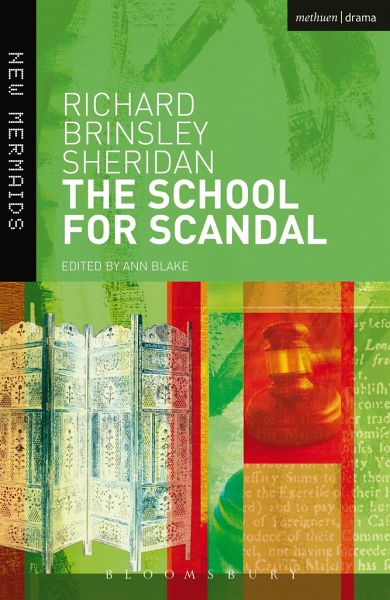
The School for Scandal
Versandkostenfrei!
Versandfertig in 2-4 Wochen
19,99 €
inkl. MwSt.
Weitere Ausgaben:

PAYBACK Punkte
10 °P sammeln!

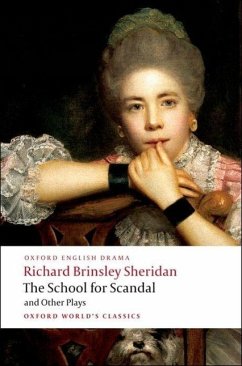
Enduringly popular less for its plots than for its verbal brillianceand wit, The School for Scandal (1777) was the most frequentlyperformed play of its time. Sir Peter Teazle has made the perennialmistake of elderly bachelors in English comedy and married a muchyounger wife in the hope that she will be too innocent to cross him. Infact, Lady Teazle spends her time with Lady Sneerwell and the worst setof scandalmongers in town, who have a beady eye on Charles Surface, thereckless young libertine, in expectation of seeing him ruined. Charles,however, turns out to possess the sterling virtues of ...
Enduringly popular less for its plots than for its verbal brilliance
and wit, The School for Scandal (1777) was the most frequently
performed play of its time. Sir Peter Teazle has made the perennial
mistake of elderly bachelors in English comedy and married a much
younger wife in the hope that she will be too innocent to cross him. In
fact, Lady Teazle spends her time with Lady Sneerwell and the worst set
of scandalmongers in town, who have a beady eye on Charles Surface, the
reckless young libertine, in expectation of seeing him ruined. Charles,
however, turns out to possess the sterling virtues of generosity and
loyalty to friends and family; and it is his hypocritical brother
Joseph who ends up the villain of the piece. This edition discusses
Sheridan's earlier drafts for the play and sets it into its theatrical
context of anti-sentimentalism and its social context of the London
High Society in which Sheridan had begun to move.
and wit, The School for Scandal (1777) was the most frequently
performed play of its time. Sir Peter Teazle has made the perennial
mistake of elderly bachelors in English comedy and married a much
younger wife in the hope that she will be too innocent to cross him. In
fact, Lady Teazle spends her time with Lady Sneerwell and the worst set
of scandalmongers in town, who have a beady eye on Charles Surface, the
reckless young libertine, in expectation of seeing him ruined. Charles,
however, turns out to possess the sterling virtues of generosity and
loyalty to friends and family; and it is his hypocritical brother
Joseph who ends up the villain of the piece. This edition discusses
Sheridan's earlier drafts for the play and sets it into its theatrical
context of anti-sentimentalism and its social context of the London
High Society in which Sheridan had begun to move.
Andere Kunden interessierten sich für