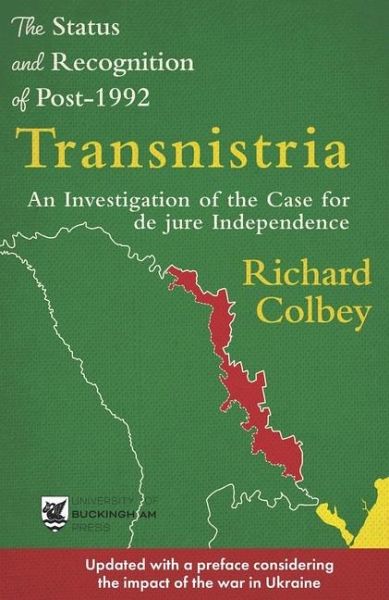
The Status and Recognition of Post-1992 Transnistria
An Investigation of the Case for de Jure Independence
Versandkostenfrei!
Versandfertig in 2-4 Wochen
26,99 €
inkl. MwSt.

PAYBACK Punkte
13 °P sammeln!

Legally part of Moldova, Transnistria lies wedged between Moldova and southern Ukraine. Following the collapse of the Soviet Union, opposition to Moldovan rule led the region into a brief but violent war in 1992, in which nearly 1,000 people were killed. Since then, Transnistria has functioned as a de facto independent state, sustained largely through Russian economic, political, and military support. Although the conflict between Moldova and Transnistria has never been formally resolved, it has long been considered "frozen," with relations remaining relatively stable and pragmatic. Drawing on...
Legally part of Moldova, Transnistria lies wedged between Moldova and southern Ukraine. Following the collapse of the Soviet Union, opposition to Moldovan rule led the region into a brief but violent war in 1992, in which nearly 1,000 people were killed. Since then, Transnistria has functioned as a de facto independent state, sustained largely through Russian economic, political, and military support. Although the conflict between Moldova and Transnistria has never been formally resolved, it has long been considered "frozen," with relations remaining relatively stable and pragmatic. Drawing on six years of research and nine extended visits to the territory, this book offers a rare and deeply informed examination of Transnistria's uncertain future. Through interviews with politicians, judges, civil servants, human rights lawyers, diplomats, police officers, academics, students, and other residents, the author explores how the state functions in practice--and what options realistically lie ahead. At the heart of the book is a central question: what is the best possible future for Transnistria, and can full legal independence ever be a viable or sustainable solution?
Andere Kunden interessierten sich für