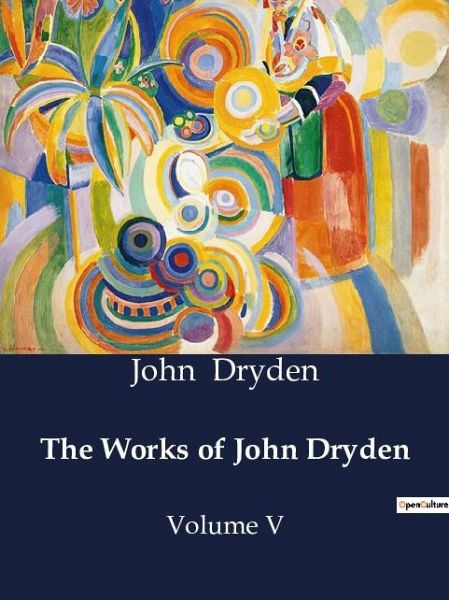
The Works of John Dryden
An Analysis of John Dryden's Contributions to Literature and His Influence on Historical Criticism
Versandkostenfrei!
Versandfertig in 1-2 Wochen
29,90 €
inkl. MwSt.

PAYBACK Punkte
0 °P sammeln!

The excerpt from "The Works of John Dryden" provides a comprehensive look into the literary and critical prowess of John Dryden, as well as his influence on historical criticism. The text includes a detailed examination of Dryden's prefaces and character analyses, showcasing his ability to blend literary critique with historical context. In the preface to "A Dialogue Concerning Women," Dryden praises the work of William Walsh, highlighting Walsh's ability to engage with complex subjects with both judgment and gallantry. Dryden's admiration for Walsh is evident, as he acknowledges Walsh's role ...
The excerpt from "The Works of John Dryden" provides a comprehensive look into the literary and critical prowess of John Dryden, as well as his influence on historical criticism. The text includes a detailed examination of Dryden's prefaces and character analyses, showcasing his ability to blend literary critique with historical context. In the preface to "A Dialogue Concerning Women," Dryden praises the work of William Walsh, highlighting Walsh's ability to engage with complex subjects with both judgment and gallantry. Dryden's admiration for Walsh is evident, as he acknowledges Walsh's role in encouraging young poets like Alexander Pope. Furthermore, Dryden's character analysis of M. St. Evremont reveals his appreciation for the French writer's wit and gallantry, despite St. Evremont's disdain for England. Dryden's own character analysis of Polybius underscores his respect for the historian's dedication to truth and his ability to foresee the decline of the Roman Empire through natural causes. Dryden's work is characterized by a commitment to truth and a disdain for the embellishments of lesser historians. His critiques are not only literary but also serve as a guide for understanding the political and social dynamics of his time. Through his writings, Dryden establishes himself as a pivotal figure in the development of historical criticism, blending literary elegance with rigorous analysis.
Andere Kunden interessierten sich für