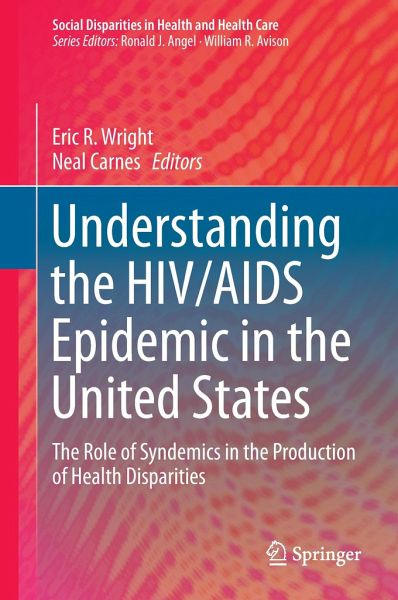
Understanding the HIV/AIDS Epidemic in the United States
The Role of Syndemics in the Production of Health Disparities
Herausgegeben: Wright, Eric R.; Carnes, Neal

PAYBACK Punkte
49 °P sammeln!

This book examines the HIV/AIDS epidemic in the United States using the concept of syndemics to contextualize the risk of both well-known, and a few lesser-known, subpopulations that experience disproportionately high rates of HIV and/or AIDS within the United States. Since discovery, HIV/AIDS has exposed a number of social, psychological, and biological aspects of disease transmission. The concept of "syndemics," or "synergistically interacting epidemics" has emerged as a powerful framework for understanding both the epidemiological patterns and the myriad of problems associated with HIV/AIDS...
This book examines the HIV/AIDS epidemic in the United States using the concept of syndemics to contextualize the risk of both well-known, and a few lesser-known, subpopulations that experience disproportionately high rates of HIV and/or AIDS within the United States. Since discovery, HIV/AIDS has exposed a number of social, psychological, and biological aspects of disease transmission. The concept of "syndemics," or "synergistically interacting epidemics" has emerged as a powerful framework for understanding both the epidemiological patterns and the myriad of problems associated with HIV/AIDS around the world and within the United States. The book considers the disparities in HIV/AIDS in relation to social aspects, risk behavior and critical illness comorbidities. It updates and enhances our understanding of the HIV/AIDS epidemic in the United States and contributes to the expanding literature on the role of syndemics in shaping the public's health.
Andere Kunden interessierten sich für