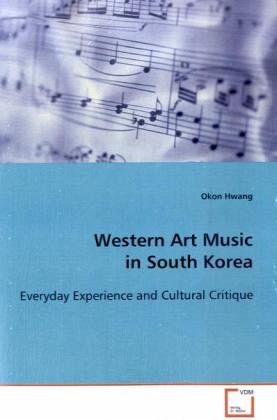
Western Art Music in South Korea
Everyday Experience and Cultural Critique
Versandkostenfrei!
Versandfertig in 6-10 Tagen
52,99 €
inkl. MwSt.

PAYBACK Punkte
26 °P sammeln!

Western art music is one of the most dominating cultural forces in contemporary South Korea. This book explores its presence in the country by providing two contrasting but interrelated angles. First, it introduces the minutiae of everyday life through the intimate portraits of individuals to provide a synchronic study of the contemporary lives involved in music making (a worm s eye view). Then, the book ventures onto diachronic analyses and macroscopic overviews in an attempt to make sense of its strong presence in the country through Confucian hypotheses and South Korean intellectuals strugg...
Western art music is one of the most dominating
cultural forces in contemporary South Korea. This
book explores its presence in the country by
providing two contrasting but interrelated angles.
First, it introduces the minutiae of everyday life
through the intimate portraits of individuals to
provide a synchronic study of the contemporary lives
involved in music making (a worm s eye view).
Then, the book ventures onto diachronic analyses and
macroscopic overviews in an attempt to make sense of
its strong presence in the country through Confucian
hypotheses and South Korean intellectuals struggle
to pinpoint its rightful location in the Korean
culturescape and consciousness (a bird s eye view).
By doing so, this book addresses the issues of
cultural ownership and identity and offers a model
that would transcend the hegemonic struggle of the
East/West dichotomy.
cultural forces in contemporary South Korea. This
book explores its presence in the country by
providing two contrasting but interrelated angles.
First, it introduces the minutiae of everyday life
through the intimate portraits of individuals to
provide a synchronic study of the contemporary lives
involved in music making (a worm s eye view).
Then, the book ventures onto diachronic analyses and
macroscopic overviews in an attempt to make sense of
its strong presence in the country through Confucian
hypotheses and South Korean intellectuals struggle
to pinpoint its rightful location in the Korean
culturescape and consciousness (a bird s eye view).
By doing so, this book addresses the issues of
cultural ownership and identity and offers a model
that would transcend the hegemonic struggle of the
East/West dichotomy.