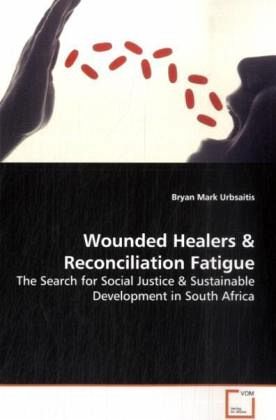
Wounded Healers
The Search for Social Justice
Versandkostenfrei!
Versandfertig in 6-10 Tagen
52,99 €
inkl. MwSt.

PAYBACK Punkte
26 °P sammeln!

How do NGOs' understandings of reconciliation differfrom those of their clients within a larger projectof national healing? How do staff at these NGOsbalance remembering the past with nation-building andinternational development when they may be victimsthemselves? Why do certain groups andindividuals continue to feel marginalized so longafter liberation? And how might NGOs in South Africaconstitute a reconciliation social movement? WoundedHealers argues that while South Africans have beenreconciling apartheid-era abuses since 1994, ongoingreconciliation struggles of individuals must not beover...
How do NGOs' understandings of reconciliation differ
from those of their clients within a larger project
of national healing? How do staff at these NGOs
balance remembering the past with nation-building and
international development when they may be victims
themselves? Why do certain groups and
individuals continue to feel marginalized so long
after liberation? And how might NGOs in South Africa
constitute a reconciliation social movement? Wounded
Healers argues that while South Africans have been
reconciling apartheid-era abuses since 1994, ongoing
reconciliation struggles of individuals must not be
overlooked within the larger quest for national
healing. Focusing on memorialization, missing
persons, 30,000R reparation payouts, as well as on
the continued oppression of marginalized identity
based on culture, race, class, gender, sexual
orientation, and HIV and AIDS, this ethnographic
analysis will appeal to all those interested in
post-conflict democratization, NGOs, international
development, non-Western communication, conflict &
peace-building, communication education, ethnography,
cultural anthropology, activism, Africa, and anyone
interested in global social justice.
from those of their clients within a larger project
of national healing? How do staff at these NGOs
balance remembering the past with nation-building and
international development when they may be victims
themselves? Why do certain groups and
individuals continue to feel marginalized so long
after liberation? And how might NGOs in South Africa
constitute a reconciliation social movement? Wounded
Healers argues that while South Africans have been
reconciling apartheid-era abuses since 1994, ongoing
reconciliation struggles of individuals must not be
overlooked within the larger quest for national
healing. Focusing on memorialization, missing
persons, 30,000R reparation payouts, as well as on
the continued oppression of marginalized identity
based on culture, race, class, gender, sexual
orientation, and HIV and AIDS, this ethnographic
analysis will appeal to all those interested in
post-conflict democratization, NGOs, international
development, non-Western communication, conflict &
peace-building, communication education, ethnography,
cultural anthropology, activism, Africa, and anyone
interested in global social justice.
Andere Kunden interessierten sich für