Celluloid Nationalism and Other Melodramas (eBook, PDF)
From Post-Revolutionary Mexico to fin de siglo Mexamerica

PAYBACK Punkte
13 °P sammeln!

Explores issues of representation and rebellion in Mexican and Mexican American cinema.Celluloid Nationalism and Other Melodramas looks at representation and rebellion in times of national uncertainty. Moving from mid-century Mexican cinema to recent films staged in Los Angeles and Mexico City, Susan Dever analyzes melodrama's double function as a genre and as a sensibility, revealing coincidences between movie morals and political pieties in the civic-minded films of Emilio Fernández, Matilde Landeta, Allison Anders, and Marcela Fernández Violante. These filmmakers' rationally and emotional...
Explores issues of representation and rebellion in Mexican and Mexican American cinema.
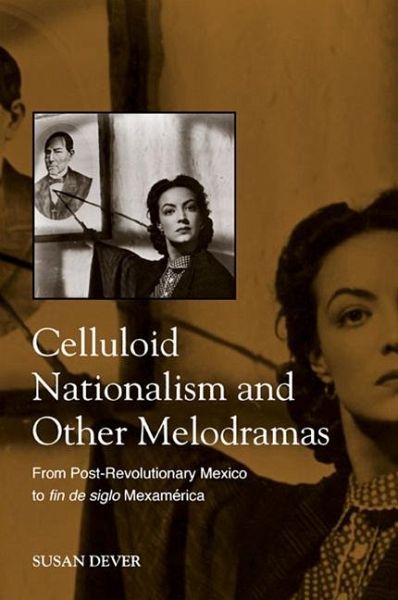
Celluloid Nationalism and Other Melodramas looks at representation and rebellion in times of national uncertainty. Moving from mid-century Mexican cinema to recent films staged in Los Angeles and Mexico City, Susan Dever analyzes melodrama's double function as a genre and as a sensibility, revealing coincidences between movie morals and political pieties in the civic-minded films of Emilio Fernández, Matilde Landeta, Allison Anders, and Marcela Fernández Violante. These filmmakers' rationally and emotionally engaged cinema-offering representations of indigenous peoples and poor urban women who alternately endorsed "civilizing" projects and voiced resistance to such totalization-both interrupts and sustains fictions of national coherence in an increasingly transnational world.
Celluloid Nationalism and Other Melodramas looks at representation and rebellion in times of national uncertainty. Moving from mid-century Mexican cinema to recent films staged in Los Angeles and Mexico City, Susan Dever analyzes melodrama's double function as a genre and as a sensibility, revealing coincidences between movie morals and political pieties in the civic-minded films of Emilio Fernández, Matilde Landeta, Allison Anders, and Marcela Fernández Violante. These filmmakers' rationally and emotionally engaged cinema-offering representations of indigenous peoples and poor urban women who alternately endorsed "civilizing" projects and voiced resistance to such totalization-both interrupts and sustains fictions of national coherence in an increasingly transnational world.
Dieser Download kann aus rechtlichen Gründen nur mit Rechnungsadresse in A, D ausgeliefert werden.
Andere Kunden interessierten sich für