Self-Analysis (eBook, PDF)
Critical Inquiries, Personal Visions
Versandkostenfrei!
Sofort per Download lieferbar
44,95 €
inkl. MwSt.
Weitere Ausgaben:

PAYBACK Punkte
22 °P sammeln!

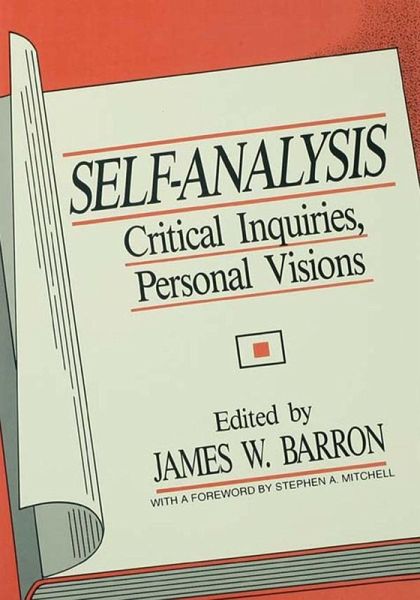
Self-Analysis is a fascinating reprise on the mode of disciplined self-inquiry that gave rise to psychoanalysis. From Freud's pioneering self-analytic efforts onward, self-analysis has been central to psychoanalytic training and psychoanalytic practice. Yet, only in recent years have analysts turned their attention to this wellspring of Freud's creation.The contributors to Self-Analysis represent diverse theoretical perspectives, but they share a common appreciation of the importance of self-analysis to the analytic endeavor. Their papers encompass systematic inquiries into the capacity for se...
Self-Analysis is a fascinating reprise on the mode of disciplined self-inquiry that gave rise to psychoanalysis. From Freud's pioneering self-analytic efforts onward, self-analysis has been central to psychoanalytic training and psychoanalytic practice. Yet, only in recent years have analysts turned their attention to this wellspring of Freud's creation.
The contributors to Self-Analysis represent diverse theoretical perspectives, but they share a common appreciation of the importance of self-analysis to the analytic endeavor. Their papers encompass systematic inquiries into the capacity for self-analysis, examples of self-analysis as an aspect of clinical work, and personal reflections on the role of self-analysis in professional growth. Among the questions explored: What do we mean by self-analysis? To what extent and under what conditions is self-analysis possible? How does it differ from ordinary introspection? What are the developmental antecedents of the capacity for self-analysis? What is the role of the "other" in self-analysis? What are the relationships among self-analysis, writing, and creativity?
As Barron observes, the contributors to the book "grapple with the formidable ambiguities of self-analysis without either idealizing or devaluing its potential." What emerges from their effort is not only an illuminating window into the psychoanalyst's subjectivity as a fact of clinical life, but a far-reaching exemplification of the ways in which self-understanding is always a constitutive part of our understanding of others.
The contributors to Self-Analysis represent diverse theoretical perspectives, but they share a common appreciation of the importance of self-analysis to the analytic endeavor. Their papers encompass systematic inquiries into the capacity for self-analysis, examples of self-analysis as an aspect of clinical work, and personal reflections on the role of self-analysis in professional growth. Among the questions explored: What do we mean by self-analysis? To what extent and under what conditions is self-analysis possible? How does it differ from ordinary introspection? What are the developmental antecedents of the capacity for self-analysis? What is the role of the "other" in self-analysis? What are the relationships among self-analysis, writing, and creativity?
As Barron observes, the contributors to the book "grapple with the formidable ambiguities of self-analysis without either idealizing or devaluing its potential." What emerges from their effort is not only an illuminating window into the psychoanalyst's subjectivity as a fact of clinical life, but a far-reaching exemplification of the ways in which self-understanding is always a constitutive part of our understanding of others.
Dieser Download kann aus rechtlichen Gründen nur mit Rechnungsadresse in A, B, BG, CY, CZ, D, DK, EW, E, FIN, F, GR, HR, H, IRL, I, LT, L, LR, M, NL, PL, P, R, S, SLO, SK ausgeliefert werden.
Andere Kunden interessierten sich für