


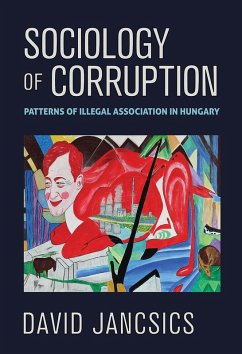
Sociology of Corruption (eBook, ePUB)
Patterns of Illegal Association in Hungary
Versandkostenfrei!
Sofort per Download lieferbar
25,95 €
inkl. MwSt.
Weitere Ausgaben:

PAYBACK Punkte
13 °P sammeln!

In Sociology of Corruption, David Jancsics provides a fresh approach to the study of corruption in Hungary, which once seemed to be the most likely of the ex-communist bloc nations to catch up to the West and is, according to many experts and scholars, a country with a highly corrupt dynamic.Based on data from 2022, Hungary is now the most corrupt member state of the European Union. There is also a consensus among experts that a small clique of corrupt political actors has captured most Hungarian state institutions and a significant portion of the business sector.What fostered corruption in Hu...
In Sociology of Corruption, David Jancsics provides a fresh approach to the study of corruption in Hungary, which once seemed to be the most likely of the ex-communist bloc nations to catch up to the West and is, according to many experts and scholars, a country with a highly corrupt dynamic.
Based on data from 2022, Hungary is now the most corrupt member state of the European Union. There is also a consensus among experts that a small clique of corrupt political actors has captured most Hungarian state institutions and a significant portion of the business sector.
What fostered corruption in Hungary? What are the most typical forms of corruption in this country? What do Hungarians think about it? What is the role of prime minister Viktor Orbán in this? Sociology of Corruption proposes a novel sociological theory of corruption focusing on social status and relationships, network structures, and power dynamics as important explanatory factors of corrupt behavior. Although his focus is on Hungary, Jancsics's findings are applicable to other nations and cultural contexts.
Based on data from 2022, Hungary is now the most corrupt member state of the European Union. There is also a consensus among experts that a small clique of corrupt political actors has captured most Hungarian state institutions and a significant portion of the business sector.
What fostered corruption in Hungary? What are the most typical forms of corruption in this country? What do Hungarians think about it? What is the role of prime minister Viktor Orbán in this? Sociology of Corruption proposes a novel sociological theory of corruption focusing on social status and relationships, network structures, and power dynamics as important explanatory factors of corrupt behavior. Although his focus is on Hungary, Jancsics's findings are applicable to other nations and cultural contexts.
Dieser Download kann aus rechtlichen Gründen nur mit Rechnungsadresse in A, D ausgeliefert werden.