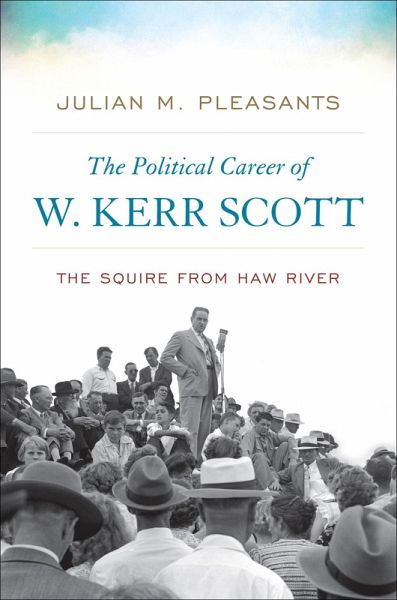
The Political Career of W. Kerr Scott (eBook, ePUB)
The Squire from Haw River

PAYBACK Punkte
0 °P sammeln!

"This biography will find its place among a growing literature on post-war Southern politics." -Charles Holden, author of The New Southern University: Academic Freedom and Liberalism at UNC When W. Kerr Scott (1896-1958) began his campaign for the North Carolina gubernatorial seat in 1948, his opponents derided his candidacy as a farce. However, the plainspoken dairy farmer quickly gathered loyal supporters and mobilized a grassroots attack on the entrenched interests that had long controlled the state government, winning the race in a historic upset. In this meticulously researched book, Juli...
"This biography will find its place among a growing literature on post-war Southern politics." -Charles Holden, author of The New Southern University: Academic Freedom and Liberalism at UNC When W. Kerr Scott (1896-1958) began his campaign for the North Carolina gubernatorial seat in 1948, his opponents derided his candidacy as a farce. However, the plainspoken dairy farmer quickly gathered loyal supporters and mobilized a grassroots attack on the entrenched interests that had long controlled the state government, winning the race in a historic upset. In this meticulously researched book, Julian M. Pleasants traces Scott's productive and controversial political career, from his years as North Carolina commissioner of agriculture, through his governorship (1949-1953), to his brief tenure as a U.S. senator (1954-1958). Scott was elected at a time when southern liberals were on the rise in post-World War II America. McCarthyism and civil rights agitation soon overwhelmed progressivism, but the trend lasted long enough for the straight-talking "Squire from Haw River" to enact major reforms and establish a reputation as one of the more interesting and influential southern politicians of the twentieth century. This long-overdue look at his political career illuminates the spirit that transformed an introspective, segregated society dependent on tobacco and textiles into a vibrant, diversified economy at the center of the industrial, banking, and information revolution in the South. "Pleasants writes with clarity and authority." -Jeffrey J. Crow, Deputy Secretary, North Carolina Department of Cultural Resources (ret.)
Andere Kunden interessierten sich für