Beschreibung
Produktdetails
Einband
Gebundene Ausgabe
Erscheinungsdatum
24.12.2020
Herausgeber
Sasha SirotkinVerlag
John Wiley & SonsSeitenzahl
448
Maße (L/B/H)
25/17,5/2,8 cm
Gewicht
942 g
Auflage
1. Auflage
Sprache
Englisch
ISBN
978-1-119-55088-4
Discover how the NG-RAN architecture is, and isn't, ready for the challenges introduced by 5G
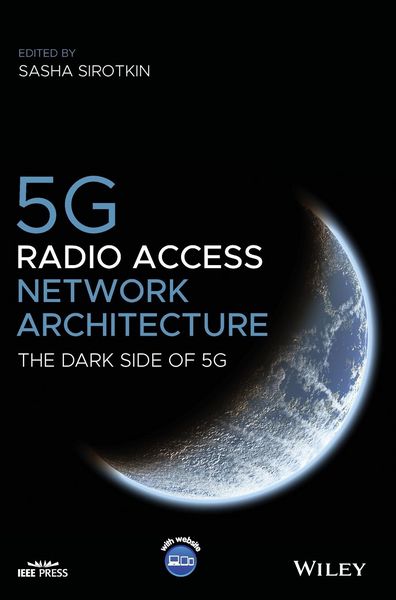
5G Radio Access Network Architecture: The Dark Side of 5G explores foundational and advanced topics in Radio Access Network (RAN) architecture and why a re-thinking of that architecture is necessary to support new 5G requirements. The distinguished engineer and editor Sasha Sirotkin has included numerous works written by industry insiders with state of the art research at their disposal. The book explains the relevant standards and technologies from an academic perspective, but also explains why particular standards decisions were made and how a variety of NG-RAN architecture options could be deployed in real-life networks.
All major standards and technologies associated with the NG-RAN architecture are discussed in this book, including 3GPP, O-RAN, Small Cell Forum, IEEE, and IETF. Readers will learn about how a re-design of the RAN architecture would ensure that 5G networks can deliver their promised throughput and low latency KPIs consistently and sustainably.
The book is structured as follows:
* An overview of the market drivers of the NG-RAN architecture, like spectrum models, 5G-relevant regulatory considerations, and 5G radio interface technical requirements
* An overview of the 5G System, from the core network, to the RAN, to the radio interface protocols and physical layer, with emphasis on how these are different compared to 4G
* Release-15 RAN architectures defined in 3GPP, O-RAN, and Small Cell Forum
* RAN architecture evolution in Release-16 and Release-17
* Enabling technologies, like virtualization, open source technologies, multi-access edge (MEC) computing, and operations, administration, and management (OAM)
* NG-RAN deployment considerations, objectives, and challenges, like costs, spectrum and radio propagation considerations, and coverage
Perfect for network designers and operators who require a solid understanding of the NG-RAN architecture, 5G Radio Access Network Architecture also belongs on the bookshelves of network engineers who aim to increase their understanding of the standards and technologies relevant to the NG-RAN architecture.
5G Radio Access Network Architecture: The Dark Side of 5G explores foundational and advanced topics in Radio Access Network (RAN) architecture and why a re-thinking of that architecture is necessary to support new 5G requirements. The distinguished engineer and editor Sasha Sirotkin has included numerous works written by industry insiders with state of the art research at their disposal. The book explains the relevant standards and technologies from an academic perspective, but also explains why particular standards decisions were made and how a variety of NG-RAN architecture options could be deployed in real-life networks.
All major standards and technologies associated with the NG-RAN architecture are discussed in this book, including 3GPP, O-RAN, Small Cell Forum, IEEE, and IETF. Readers will learn about how a re-design of the RAN architecture would ensure that 5G networks can deliver their promised throughput and low latency KPIs consistently and sustainably.
The book is structured as follows:
* An overview of the market drivers of the NG-RAN architecture, like spectrum models, 5G-relevant regulatory considerations, and 5G radio interface technical requirements
* An overview of the 5G System, from the core network, to the RAN, to the radio interface protocols and physical layer, with emphasis on how these are different compared to 4G
* Release-15 RAN architectures defined in 3GPP, O-RAN, and Small Cell Forum
* RAN architecture evolution in Release-16 and Release-17
* Enabling technologies, like virtualization, open source technologies, multi-access edge (MEC) computing, and operations, administration, and management (OAM)
* NG-RAN deployment considerations, objectives, and challenges, like costs, spectrum and radio propagation considerations, and coverage
Perfect for network designers and operators who require a solid understanding of the NG-RAN architecture, 5G Radio Access Network Architecture also belongs on the bookshelves of network engineers who aim to increase their understanding of the standards and technologies relevant to the NG-RAN architecture.
Noch keine Bewertungen vorhanden
Verfassen Sie die erste Bewertung zu diesem Artikel
Helfen Sie anderen Kundinnen und Kunden durch Ihre Meinung.
Kurze Frage zu unserer Seite
Vielen Dank für dein Feedback
Wir nutzen dein Feedback, um unsere Produktseiten zu verbessern. Bitte habe Verständnis, dass wir dir keine Rückmeldung geben können. Falls du Kontakt mit uns aufnehmen möchtest, kannst du dich aber gerne an unseren Kund*innenservice wenden.
zum Kundenservice