KI-Beratung Beta

Gutscheinbedingungen

**Gültig vom 05.10.2026 bis 07.10.2026 | Gültig für nicht preisgebundene fremdsprachige Bücher | Einzelne Artikel können ausgeschlossen sein | Online auf www.bücher.de einlösbar | Click & Collect nur mit Online-Zahlung (Paypal/Kreditkarte) vorab | Nicht kombinierbar mit anderen Gutscheinen oder Preisaktionen | Nur einmal pro Einkauf einlösbar | Gutschein wird auf max. 500€ Bestellwert angerechnet | Keine Barauszahlung | Nicht gültig für Versandkosten und Services

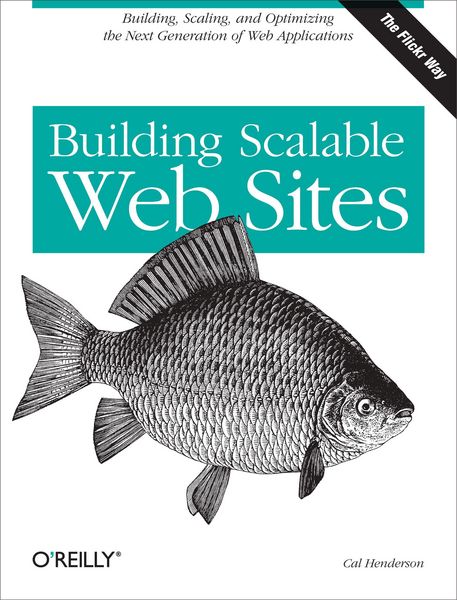
Produktbild: Building Scalable Web Sites

Building Scalable Web Sites

34,99 €

inkl. gesetzl. MwSt., Versandkostenfrei


Produktdetails

Einband

Taschenbuch

Erscheinungsdatum

20.06.2006

Verlag

O'Reilly Media

Seitenzahl

349

Maße (L/B/H)

23,3/18,1/2,5 cm

Gewicht

578 g

Sprache

Englisch

ISBN

978-0-596-10235-7

Produktdetails

Einband

Taschenbuch

Erscheinungsdatum

20.06.2006

Verlag

O'Reilly Media

Seitenzahl

349

Maße (L/B/H)

23,3/18,1/2,5 cm

Gewicht

578 g

Sprache

Englisch

ISBN

978-0-596-10235-7

Herstelleradresse

Libri GmbH
Europaallee 1
36244 Bad Hersfeld
DE

Email: gpsr@libri.de

Noch keine Bewertungen vorhanden

Verfassen Sie die erste Bewertung zu diesem Artikel

Helfen Sie anderen Kundinnen und Kunden durch Ihre Meinung.

Kundinnen und Kunden meinen

Bewertungen (0)

Die Leseprobe wird geladen.
  • Produktbild: Building Scalable Web Sites
  • Preface; ; What This Book Is About; What You Need to Know; Conventions Used in This Book; Using Code Examples; Safari® Enabled; How to Contact Us; Acknowledgments; Chapter 1: Introduction; 1.1 What Is a Web Application?; 1.2 How Do You Build Web Applications?; 1.3 What Is Architecture?; 1.4 How Do I Get Started?; Chapter 2: Web Application Architecture; 2.1 Layered Software Architecture; 2.2 Layered Technologies; 2.3 Software Interface Design; 2.4 Getting from A to B; 2.5 The Software/Hardware Divide; 2.6 Hardware Platforms; 2.7 Hardware Platform Growth; 2.8 Hardware Redundancy; 2.9 Networking; 2.10 Languages, Technologies, and Databases; Chapter 3: Development Environments; 3.1 The Three Rules; 3.2 Use Source Control; 3.3 One-Step Build; 3.4 Issue Tracking; 3.5 Scaling the Development Model; 3.6 Coding Standards; 3.7 Testing; Chapter 4: i18n, L10n, and Unicode; 4.1 Internationalization and Localization; 4.2 Unicode in a Nutshell; 4.3 Unicode Encodings; 4.4 The UTF-8 Encoding; 4.5 UTF-8 Web Applications; 4.6 Using UTF-8 with PHP; 4.7 Using UTF-8 with Other Languages; 4.8 Using UTF-8 with MySQL; 4.9 Using UTF-8 with Email; 4.10 Using UTF-8 with JavaScript; 4.11 Using UTF-8 with APIs; Chapter 5: Data Integrity and Security; 5.1 Data Integrity Policies; 5.2 Good, Valid, and Invalid; 5.3 Filtering UTF-8; 5.4 Filtering Control Characters; 5.5 Filtering HTML; 5.6 Cross-Site Scripting (XSS); 5.7 SQL Injection Attacks; Chapter 6: Email; 6.1 Receiving Email; 6.2 Injecting Email into Your Application; 6.3 The MIME Format; 6.4 Parsing Simple MIME Emails; 6.5 Parsing UU Encoded Attachments; 6.6 TNEF Attachments; 6.7 Wireless Carriers Hate You; 6.8 Character Sets and Encodings; 6.9 Recognizing Your Users; 6.10 Unit Testing; Chapter 7: Remote Services; 7.1 Remote Services Club; 7.2 Sockets; 7.3 Using HTTP; 7.4 Remote Services Redundancy; 7.5 Asynchronous Systems; 7.6 Exchanging XML; 7.7 Lightweight Protocols; Chapter 8: Bottlenecks; 8.1 Identifying Bottlenecks; 8.2 External Services and Black Boxes; Chapter 9: Scaling Web Applications; 9.1 The Scaling Myth; 9.2 Scaling the Network; 9.3 Load Balancing; 9.4 Scaling MySQL; 9.5 MyISAM; 9.6 MySQL Replication; 9.7 Database Partitioning; 9.8 Scaling Large Database; 9.9 Scaling Storage; Chapter 10: Statistics, Monitoring, and Alerting; 10.1 Tracking Web Statistics; 10.2 Application Monitoring; 10.3 Alerting; Chapter 11: APIs; 11.1 Data Feeds; 11.2 Mobile Content; 11.3 Web Services; 11.4 API Transports; 11.5 API Abuse; 11.6 Authentication; 11.7 The Future; Colophon;