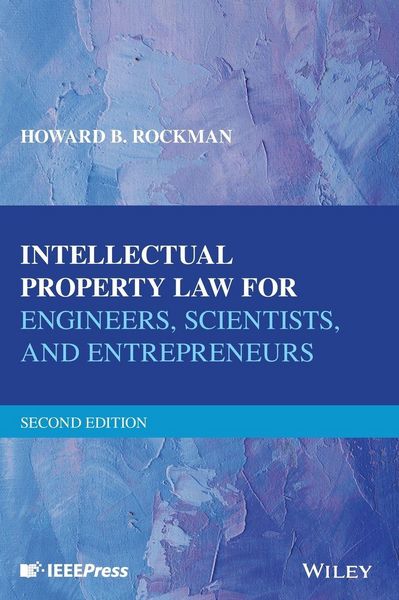
Intellectual Property Law for Engineers, Scientists, and Entrepreneurs
158,99 €
inkl. gesetzl. MwSt.,
Beschreibung
Produktdetails
Einband
Gebundene Ausgabe
Erscheinungsdatum
03.01.2020
Verlag
John Wiley & SonsSeitenzahl
976
Maße (L/B/H)
26,1/18,4/4,3 cm
Gewicht
1690 g
Auflage
2nd edition
Sprache
Englisch
ISBN
978-1-119-38197-6
This book informs engineering and science students, technology professionals, and entrepreneurs about the intellectual property laws that are important in their careers. It covers all of the major areas of intellectual property development and protection in non-legalistic terms that are understandable to technology and science professionals. New material includes a comprehensive discussion on the American Invents Act (AIA), coverage of many new high-profile topics, such as patent protection the mobile communications industry, and a new chapter on "The Future of Technology, Engineering, and Intellectual Property."
Now in its second edition, Intellectual Property Law for Engineers, Scientists, and Entrepreneurs enables inventors and creators to efficiently interface with an intellectual property attorney in order to obtain the maximum protection for their invention or creation, and to take steps to ensure that that invention or creation does not infringe upon the intellectual property rights of others. It includes patent, trade secret, mask work, and cybersquatting legal and procedural principles. The book also shows readers how to properly use new vehicles of intellectual property protection for novel software, biotech, and business method inventions. Additionally, it examines trademark protection for domain names, and other ancillary matters that fall within the genre of intellectual property protection. This informative text:
* Covers all of the major areas of intellectual property development and protection in clear, layman's terms so as to be easily understood by technology and science professionals
* Provides detailed outlines of patent, trademark, copyright, and unfair competition laws
* Offers essays on famous and noteworthy inventors and their inventions--and features a copy of the first page of patents resulting from these inventors' efforts
* Covers many new high-profile cases covering patent protection within the mobile communications industry
Intellectual Property Law for Engineers, Scientists, and Entrepreneurs, Second Edition is an excellent text for graduate and undergraduate engineering students, as well as professionals and those starting a new technology business who need to know all the laws concerning their inventions and creations.
Noch keine Bewertungen vorhanden
Verfassen Sie die erste Bewertung zu diesem Artikel
Helfen Sie anderen Kundinnen und Kunden durch Ihre Meinung.
Kurze Frage zu unserer Seite
Vielen Dank für dein Feedback
Wir nutzen dein Feedback, um unsere Produktseiten zu verbessern. Bitte habe Verständnis, dass wir dir keine Rückmeldung geben können. Falls du Kontakt mit uns aufnehmen möchtest, kannst du dich aber gerne an unseren Kund*innenservice wenden.
zum Kundenservice